Ourika Valley Day Trip from Marrakech: What to See & Do
💡 Quick Answer An Ourika Valley day trip is one of the easiest ways to experience the High Atlas from Marrakech. In just one day, you can:
|
Most guides treat Ourika as a quick stop between the waterfall photo and the bus ride home. Having done this drive more times than I can count, I’d argue that’s the wrong way to see it. This guide walks through what an Ourika Valley day trip actually looks like on the ground where to eat, where the crowds thin out, and what most first-timers miss entirely. If you’re still deciding where Ourika fits among your options, it’s worth a look at our Best Day Trips from Marrakech before you lock in your itinerary.
On This Page
Why the Ourika Valley Feels Different from Every Other Day Trip
Your Perfect Day in the Ourika Valley
The Best Views You Shouldn’t Miss
What to Eat in the Ourika Valley
Beyond the Waterfalls : Authentic Experiences
Common Mistakes First-Time Visitors Make
Conclusion
Why the Ourika Valley Feels Different from Every Other Day Trip
Most day trips out of Marrakech are built around one big thing: a waterfall, a kasbah, or a stretch of coast. Ourika is different. The river runs through the valley, shaping its villages, cafés, and terraced fields.
You notice the change almost immediately as the ochre plains give way to the green slopes of the High Atlas, which National Geographic has highlighted for its Amazigh villages and mountain scenery.
Ourika sits at the lower end of the High Atlas, which is part of why it works as a first taste of the range. If you want to go further up, our Atlas Mountains day trip from Marrakech takes in Ourika alongside the higher valleys.
What travelers usually remember isn’t the waterfall itself but the walk to it, with riverside paths, walnut trees, and quiet villages along the way.
It rewards slowing down, something many rushed Atlas itineraries miss, and is one reason the Morocco Tourist Office lists it among the country’s classic Atlas excursions.
Your Perfect Day in the Ourika Valley
Morning Experience
Leave Marrakech by 8:30 AM to beat the traffic. At Setti Fatma, a path leads to seven waterfalls. The first two are well worth the walk, but the trail gets steep and slippery beyond that. Hire a local guide if you want to go further. Budget 60–90 minutes for the hike.
Lunch by the River
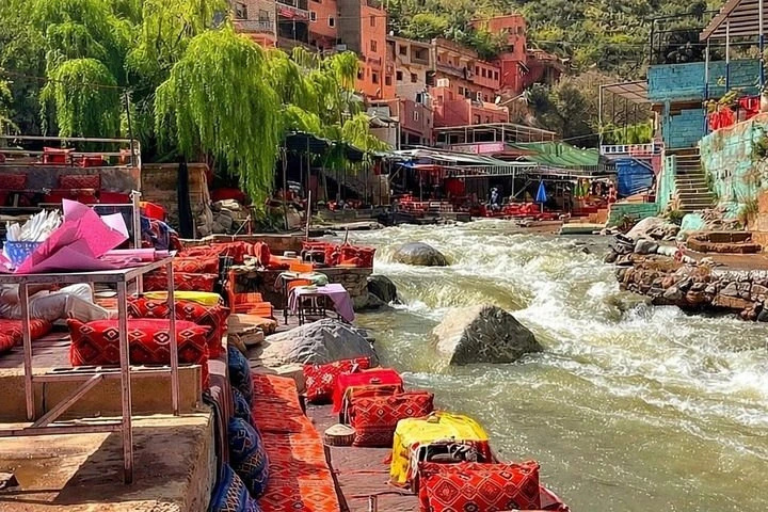
Skip the crowded cafés at the parking lot and walk five minutes upstream. Family-run terraces sit right over the water, the perfect spot for a Berber tagine and mint tea, with the river running beneath your feet.
Afternoon Adventure
After lunch, skip the higher waterfall hike and explore the village instead. Its narrow lanes, clay houses, Monday souk, and relaxed shopkeepers make it an underrated gem, give it at least an hour. Imlil and Toubkal are worth their own separate day.
If souks are your thing, our shopping guide to the Marrakech souks covers the same haggling and craft-hunting back in the city
If Ourika is your only excursion and the rest of your stay is in the city, our guide to spending one day in Marrakech pairs well with this itinerary
Still weighing your options? Our guide to the best day trips from Marrakech compares Ourika against the nine other excursions worth your time.
It rewards slowing down, something many rushed Atlas itineraries miss, and is one reason the Morocco Tourist Office lists it among the country’s classic Atlas excursions. Travelers who enjoy this kind of slower pace often like our hidden gems of Marrakech guide too, for similarly under-the-radar spots in the city
Scenic Drive Back
Head back around 4:30–5 PM to catch the late afternoon light on the terraced fields, the best time for photos. You’ll be back in Marrakech in time for dinner, refreshed rather than rushed.
| 💡 Local Tip from Ayoub: Most people focus on the destination, but the drive is part of the experience. Ask your driver to stop at a few viewpoints, you’ll often get the best photos before you even arrive. |
The Best Views You Shouldn't Miss
Ourika doesn’t have one single viewpoint, the good spots are scattered along the drive, and most tour groups blow straight past them. A few extra minutes at each makes a real difference in your photos, and none require a hike.
- The Aghbalou terrace bend a wide curve in the road, roughly midway into the valley, where the terraced fields fan out below you in overlapping green steps, Best around 9 –10 AM, when the light is still soft.
- The second waterfall viewing rock a flat boulder just before the trail narrows, giving a full, unobstructed view of the falls without the climb. Good for anyone traveling with kids or older relatives. If you’d rather see a bigger single drop than a series of smaller falls, the Ouzoud Waterfalls Day Trip is the better match..
- The suspension footbridge near Setti Fatma is a working bridge locals cross daily with baskets and mules, not a tourist installation. It frames the river and mountains in a single shot.
- The walnut grove trail is a quiet, shaded side trail on the village’s east edge, almost always empty, Less dramatic, but a good spot for ten minutes of actual quiet.
- The upper road switchbacks a few kilometers past Setti Fatma, where pullouts look back down the whole valley. Most day-trippers turn around at the village, so this stretch stays empty.
None of these are officially marked, so ask your driver or guide by name. Locals know all five spots even if they’ve never heard them called that.
What to Eat in the Ourika Valley
Food here is simple, seasonal, and better than it has any right to be for the price. What to look for:
Berber Tagine : Slow-cooked chicken or seasonal vegetables with olives and preserved lemon, served straight from the clay pot it was cooked in. Every family has its own recipe, making it one of the most authentic dishes to try in the valley.

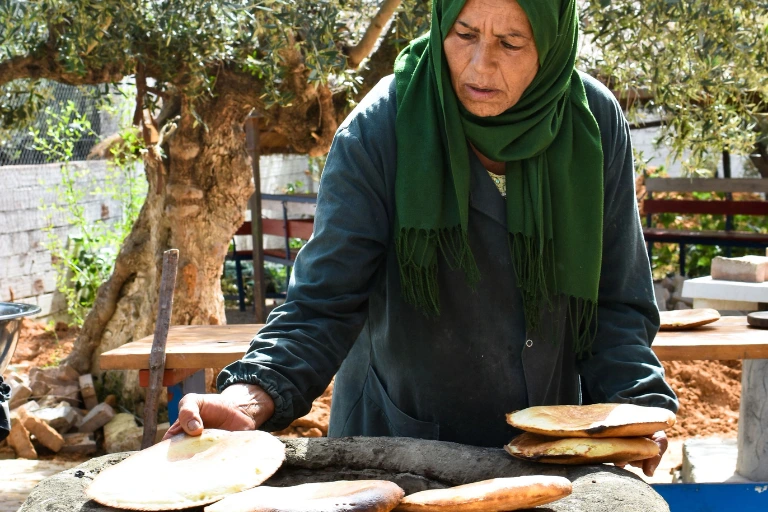
Fresh Khobz: Baked daily in communal ovens, this traditional Moroccan bread is served with almost every meal. It doubles as your fork for scooping up tagine sauce and salads.
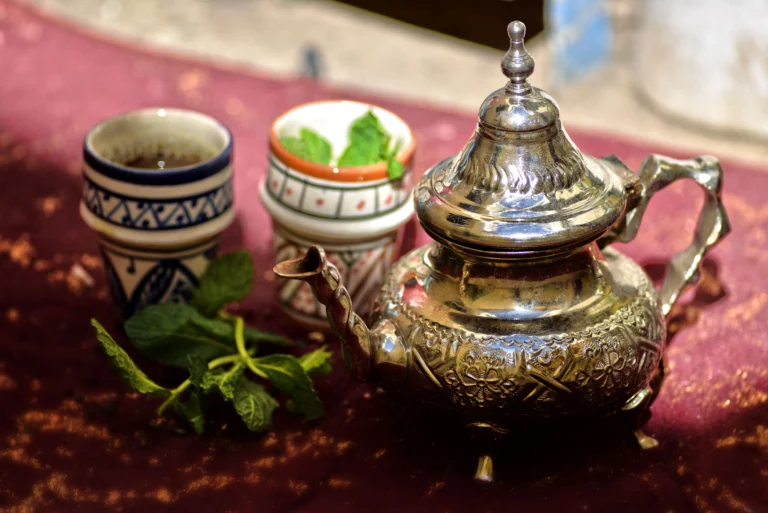
Mint Tea, Poured Properly: A good host pours the tea from a height to create its signature layer of foam while blending the flavors. The ritual is as much a part of the experience as the tea itself.
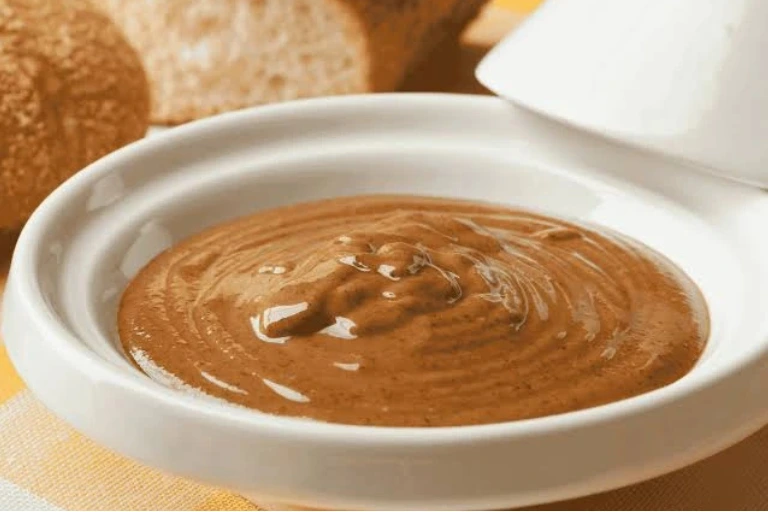
Amlou: A rich spread made from roasted almonds, argan oil, and honey, traditionally enjoyed with bread at breakfast or tea time. It’s sold at roadside cooperatives and local stalls, making it one of the easiest and tastiest souvenirs to bring home.
Msemen with Honey: A folded, pan-fried Moroccan flatbread with a crispy outside and soft, flaky layers inside. Served warm with local honey or amlou, it’s the closest thing to dessert you’ll find in many riverside cafés.

|
💡 Local Tip from Ayoub: Ask if they have amlou made in the village rather than the branded jars on the shelf. It’s thicker, less sweet, and usually comes out of a back room only if you ask. |
Beyond the Waterfalls : Authentic Experiences
The waterfalls get the attention, but they’re not actually the most interesting part of the valley, as even the Marrakech-Safi Regional Tourism Council’s own Ourika guide hints at with its focus on Berber villages and craft markets. A few things worth building time for:
- Berber villages clusters of red clay houses built directly into the hillside, many still using traditional irrigation channels that are centuries old.
- Argan oil cooperatives women-run cooperatives near the valley entrance where you can watch the traditional cold-press process, buy oil directly from the producers rather than a middleman shop.
- Artisan shops, small pottery and weaving workshops tucked into the villages, generally far less commercial than anything in the medina. If kasbahs and architecture interest you more than crafts, the Ait Benhaddou Day Trip leans into that side of the region instead.
- Monday souk a weekly market in the lower valley where locals, not tourists, do their shopping. Worth timing your trip around if your schedule allows.
If green valleys aren’t really your thing and you’re after something starker and more dramatic, the Agafay Desert Luxury Experience is the closest contrast you’ll find this close to Marrakech
Common Mistakes First-Time Visitors Make
Five things that go wrong most often, and how to avoid them. If you’re weighing Ourika against other regions entirely, our Atlas vs Agafay vs Essaouira comparison is worth checking before you commit.
The tips below cover the issues first-time visitors encounter most often.
| Mistake | Why it matters | Fix |
| Arriving after 10 AM | Parking fills up and the trail gets crowded with tour groups | Leave Marrakech by 8:30 AM |
| Wearing sandals or flip-flop | The waterfall path is rocky, uneven, and often wet | Closed shoes with grip |
| Only visiting the waterfalls | Misses the villages, souk, and cooperatives the more memorable half of the trip | Budget at least an hour for the village |
| Forgetting cash | Cards aren’t accepted almost anywhere in the valley | Withdraw dirhams before leaving Marrakech |
| Skipping a price agreement with informal guides | Leads to awkward negotiation after the fact | Agree on the fee before starting the walk |
| 💡 Local Tip from Ayoub : Before you head out, ask the café owners in Setti Fatma how high the water is. If it rained in Marrakech the night before, the river rises and the rocks between the second and third waterfalls get slippery. These owners check the river every day, so they know what they’re talking about. If they tell you to wait an hour, just wait |
Conclusion
An Ourika Valley day trip works because it doesn’t ask much of you, no early flights, no overnight bags, just a short drive into cooler air and a slower pace. You’ll leave with wet shoes, a stomach full of tagine, and probably more photos of terraced fields than waterfalls. That’s the trip working as intended.
Still weighing your options? Our guide to the best day trips from Marrakech compares Ourika against the nine other excursions worth your time.
Frequently Asked Questions
Yes. A full day, roughly 8 to 9 hours door to door, is enough to see the waterfalls, a Berber village, and have a proper lunch without rushing.
It is not legally required, but local guides know the safest route between the seven waterfalls, and the path is unmarked and slippery in places, so hiring one at the trailhead is worth the small fee.
Closed, grippy shoes are essential for the waterfall trail, along with a light layer since the valley sits noticeably cooler than Marrakech, especially near the water.
Locals do swim in some of the lower pools during summer, though the water is cold year-round and currents strengthen after rain, so check conditions with your guide first.
For the peak window from October to April, and especially December to March, the best luxury and mid-range camps fill quickly. Booking several weeks ahead gives you the widest choice of tent orientation and dates. Last-minute stays are possible but limit your options.