Erg Chebbi Dunes: Everything to Know About Morocco's Iconic Sahara
💡 Quick Answer Here’s what you need to know before visiting the Merzouga desert:
|
I’ve been walking these dunes since long before I started guiding, and I still find new corners every season. This Erg Chebbi dunes guide is not about how to get there from Marrakech. It’s about the sand itself: how it formed, where to go once you’re in it, and what most visitors miss while they’re busy taking the same sunset photo.
On This Page
- What Erg Chebbi Actually Is
- The Geography: North, South, East and West
- The Signature Experience: Sunrise and Sunset on the Dunes
- Beyond the Camel Ride: Things Most Visitors Miss
- When to Visit Erg Chebbi
- Who Erg Chebbi Suits
- Mistakes I See on the Dunes
- Conclusion
What Erg Chebbi Actually Is

An erg is a sea of sand shaped by the wind. Erg Chebbi is a small one by Saharan standards, a strip of orange dunes rising out of flat, black, stony ground called hamada. That contrast is exactly why it looks so dramatic: there is no slow build up. You drive across bare rock, and suddenly a wall of sand stands in front of you.
You’ll read everywhere that the dunes reach 150 m, and NASA’s Earth Observatory describes about a dozen large star shaped dunes, many of them taller than 150 m. The most studied one, though, gives a more precise picture. Researchers measured Lala Lallia, the big dune near Hassilabied, at about 100 m high and 700 m wide, and found that it took roughly 900 years to build.
According to Aberystwyth University’s research on the Lala Lallia star dune, the sand at its base was laid down around 13,000 years ago, while the dune itself grew mostly in the last thousand years and is slowly moving west.
I like telling people this on top of that dune. Its name means “highest sacred point” in Tamazight, and suddenly they realize they’re standing on something that is alive, in its own slow way.
Why Star Dunes Look the Way They Do
A star dune forms when winds blow from several directions. Instead of one long crest, you get a central peak with arms reaching out, like a starfish seen from above.
At Erg Chebbi, two opposing winds do most of the work, which is why the ridgelines twist and change angle as you walk. For photographers, it means every hour of light shows you a different shape.
Water Under the Sand
This surprises almost everyone. The same NASA page explains that a hard layer of rock, mostly schist, lies under the dunes and stops water from draining deep.
So the water table stays shallow, and the villages around the erg have relied on it for generations, partly through khettaras, the old underground channels you’ll see as lines of holes in the ground near the villages. When a guest asks me how anyone could farm here, I walk them to one of these channels.
The Geography: North, South, East and West
Erg Chebbi is often called “the Merzouga dunes,” but Merzouga is only one of several villages along its western edge. Where you enter the sand changes your whole experience.
The West Side: Villages and Guesthouses
This is where most people arrive. Merzouga, Hassilabied and smaller villages like Tanamoust and Takoujt sit right against the first dunes. Guesthouses here let you walk from your room straight onto the sand, which is great if you’d rather not sleep at a camp.
Hassilabied and the Big Dune
Hassilabied is my favorite base on the western side. It’s quieter than Merzouga, and Lala Lallia rises right behind it. If you want one serious climb during your stay, this is the one.
The East Side: Camps and Silence
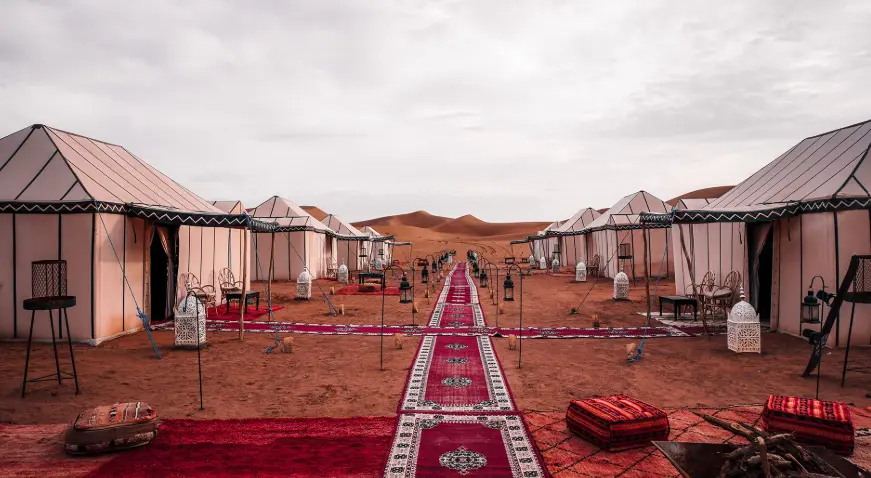
Most desert camps are set up on the eastern side, deeper in, away from the road. From here you see nothing but sand in every direction, which is the view most people have in mind when they book. If you’re weighing up where to sleep, I’ve compared the options in my guide to luxury desert camps in the Sahara in Morocco
The Southern Tip and Khamlia
Toward the south, the dunes thin out near Khamlia, the village known for its Gnawa musicians. This end sees fewer camels and more open horizon.
If you haven’t decided yet whether Erg Chebbi is the right desert for your trip, start with my comparison of Merzouga vs Zagora, then come back here.
Around Zagora
The Signature Experience: Sunrise and Sunset on the Dunes

Everyone arrives for sunset. I understand why, but I’ll say it plainly: sunrise is better. At sunset you share the ridges with other groups and camels coming in. At sunrise, the camp is quiet, the sand is cool, and the first light turns the western slopes from grey to copper in a few minutes.
How to Climb a Dune Without Wearing Yourself Out
Walk along the crest, not straight up the face. The ridgeline is firmer because the wind packs it, while the slopes are soft and slide under your feet. Step into the footprints of the person in front of you. And start earlier than you think: a big dune takes much longer than it looks from the bottom.
The Camel Ride Itself
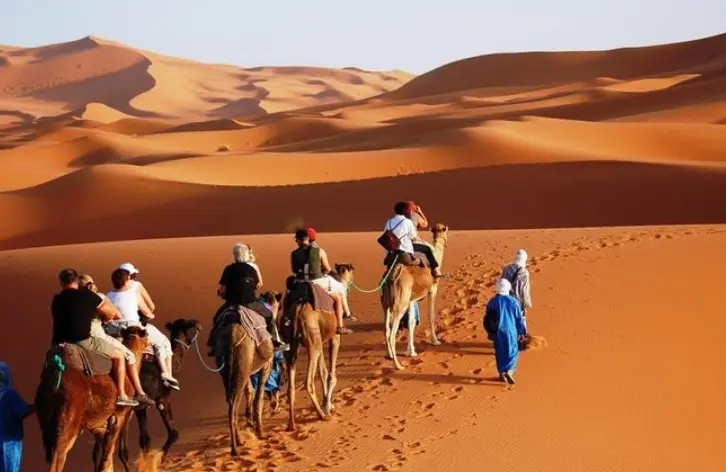
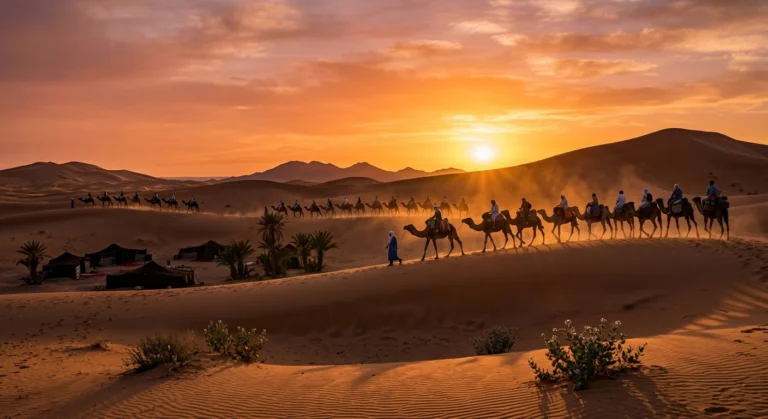
Most people reach their camp on a dromedary at the end of the afternoon. I’ve described exactly what the ride and the night at camp look like in my 3 day Sahara tour from Marrakech itinerary, so I won’t repeat it here. What I will add is this: ask your camel handler to stop on a ridge ten minutes before sunset, not at the camp. The view from the moving caravan beats the view from the tent.
| 💡 LOCAL TIP FROM AYOUB “Before sunrise, don’t climb the dune right next to your camp: everyone does, and you’ll have company. Walk five minutes along the crest to the next high point, facing east. Take your camera, but also sit for a while without it. The silence in the minutes before the sun appears is the thing my guests remember most, and a phone screen ruins it.” |
Beyond the Camel Ride: Things Most Visitors Miss
Dayet Srji, the Seasonal Lake
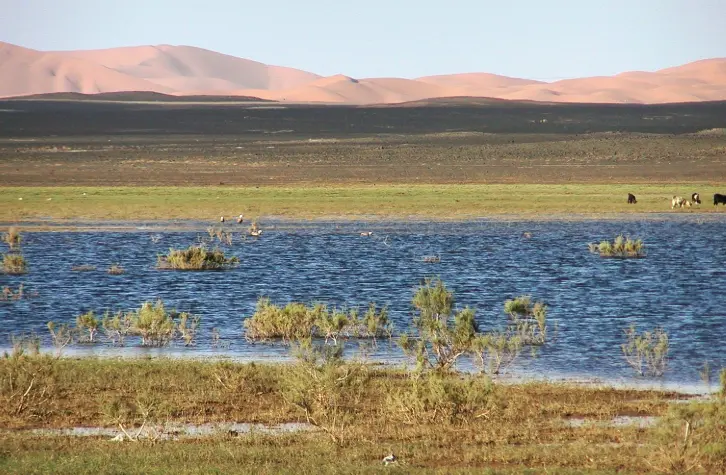
On the western side, a shallow depression near Merzouga fills with water after good rains. When it does, flamingos and other birds arrive, and the big dunes reflect in the water. When it’s dry, it’s a cracked salt flat. I always check the water level before promising anything, because in dry years there is nothing to see.
Sandboarding

A board, a steep slope and a bit of patience. It’s slower than snowboarding and much harder to walk back up, but it’s the one activity kids ask to repeat. Go late in the afternoon when the sand has cooled.
The Summer Sand Baths
This is a very local tradition that few foreign visitors know about. Between June and September, when the sand is at its hottest, Moroccan families come to Merzouga to be buried up to the neck in hot sand for a short time, a practice people use for joint and back pain. It’s a cultural experience more than a treatment I’d recommend for everyone, and anyone with heart or blood pressure problems should ask a doctor first.
Quads and 4x4s, Honestly

You can rent quads on the edge of the erg. I’m not a fan: they’re loud, and the tracks they leave are visible even in astronaut photos of the dunes. If you want speed, a 4×4 ride around the edge of the erg with a local driver covers more ground and disturbs the camps less.
When to Visit Erg Chebbi
| Season | What to Expect | My Take |
|---|---|---|
| Spring (March to May) | Pleasant days, possible wind and sandstorms, best chance for the lake to hold water | My favorite season overall |
| Summer (June to August) | Intense heat in the middle of the day, sand bath season | Only mornings and evenings on the sand |
| Autumn (September to November) | Warm days, calmer air, clear skies | Excellent for photography and stargazing |
| Winter (December to February) | Mild days, cold nights at camp | Great light, but pack properly for the night |
Whatever the season, the cold at night catches people out. My full list of what to pack for the Sahara in Morocco covers what actually matters, and what you can leave in Marrakech.
So start with your calendar, then look at the photo in your head. If the two agree, you have your answer. If they don’t, tell me how many days you have and what you most want to feel out there, and we’ll build the trip around it on one of our private tour experiences.
Who Erg Chebbi Suits
First time in the Sahara. This is the classic image of the desert, and for most people it matches what they came for.
Photographers. The star dunes change shape with every hour of light. Ask for two nights if you can: one sunset and one sunrise is rarely enough.
Families. Kids love the dunes. The long drive is the challenge, not the sand itself.
Couples and slow travelers. A night at a private camp is one of the most romantic things you can do in Morocco. Many of my couples pair it with a few quiet days afterward, and our Marrakech retreat is built for exactly that.
Travelers with limited mobility. Most camps can be reached by 4×4, so you don’t have to ride or climb to enjoy the dunes.
So start with your calendar, then look at the photo in your head. If the two agree, you have your answer. If they don’t, tell me how many days you have and what you most want to feel out there, and we’ll build the trip around it on one of our private tour experiences.
Mistakes I See on the Dunes
| Mistake | Why It Matters | Fix |
|---|---|---|
| Climbing straight up the face of a dune | Soft sand slides under you and you tire in minutes | Follow the crest line, where the sand is firmer |
| Going only for sunset | The ridges are crowded and the light fades fast | Get up for sunrise, when the camp is quiet |
| Walking on the sand at midday in summer | The surface gets extremely hot | Stay on the sand in the early morning and late afternoon |
| Expecting flamingos in any season | The lake is often dry | Ask your guide about the water level before going |
| Wandering off alone at night | Every dune looks the same in the dark | Keep a light on and stay within sight of camp |
| Treating the erg like a playground for engines | Quads scar the dunes and disturb the camps | Choose a camel, your feet, or a 4×4 with a local driver |
Conclusion
Erg Chebbi isn’t just a backdrop for a camel photo. It’s a living landscape, with dunes that move a little every year, water hidden under the sand, and villages that have learned to live with both. Give it more than one sunset, and it will show you a lot more than the postcard.
If you’d like to see it with a guide who knows these dunes, have a look at our Sahara desert tour from Marrakech. Tell me how much time you have, and I’ll tell you honestly how much sand you can fit into it.
Frequently Asked Questions
About 560 km, roughly 9 hours of driving without stops. That’s why most trips from Marrakech take at least 3 days, with the outward drive split over two.
Many sources, including NASA, put the tallest at more than 150 m. The best studied dune, Lala Lallia near Hassilabied, measures about 100 m high and 700 m wide.
Small dunes take a few minutes. The big ones are a real workout in loose sand. Follow the crest line, go slowly, and climb early in the morning when the sand is cool.
Spring and autumn offer the most comfortable days. Summer is very hot at midday, and winter nights at camp are cold, but both still work with the right timing and clothing.