What to Pack for a Sahara Desert Tour from Marrakech
💡 Quick Answer The short packing list for a Sahara trip from Marrakech:
|
Every week, I pick up guests in Marrakech with suitcases big enough for a month, and sandals as their only shoes. By the second night, they’re borrowing my jacket. I’ve lived in Marrakech all my life and taken hundreds of people into the dunes, so here is what to pack for the Sahara in Morocco, based on what people actually use, forget and regret.
On This Page
- Why Packing for the Sahara Is Different
- The Two Bag System
- Clothing: Hot Days, Cold Nights
- Gear and Electronics
- Health, Sun and Comfort
- What to Leave in Marrakech
- Packing by Traveler Type
- Mistakes I See First Timers Make
- Conclusion
Why Packing for the Sahara Is Different
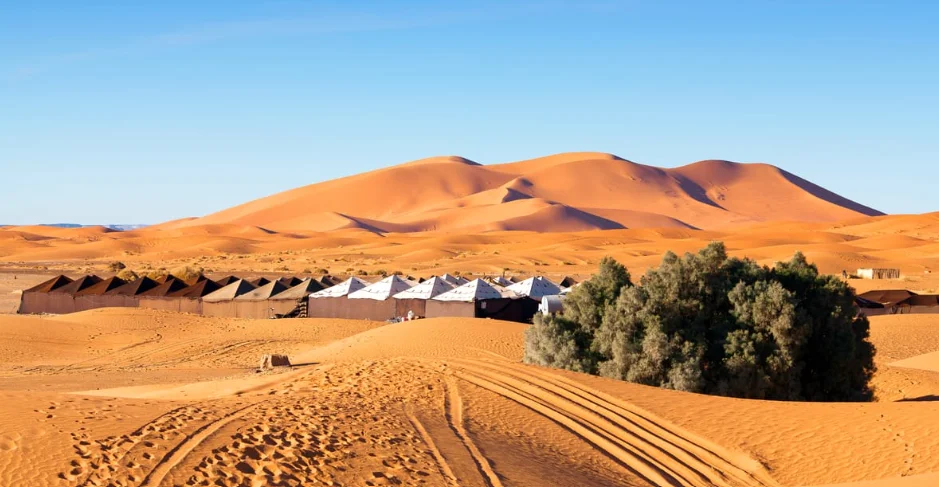
A Sahara trip from Marrakech isn’t one climate. It’s three. On the first morning, you cross the High Atlas over the Tizi n’Tichka pass, where snow can fall between November and March. In the afternoon, you’re in the dry, sunny valleys of the south. And at night on the dunes, the temperature drops fast once the sun goes down, because sand holds very little heat.
So the goal isn’t to pack more. It’s to pack layers. I’ve laid out the full route, stop by stop, in my 3 day Sahara tour from Marrakech itinerary, and if you look at it with your suitcase in mind, you’ll see why one outfit never covers a whole day.
If you’re still choosing your route and trip length, our Sahara desert tour from Marrakech page shows the options before you start packing.
The Two Bag System
This is the most useful thing I can tell you, and it costs nothing.
Your Main Bag Stays in the Vehicle
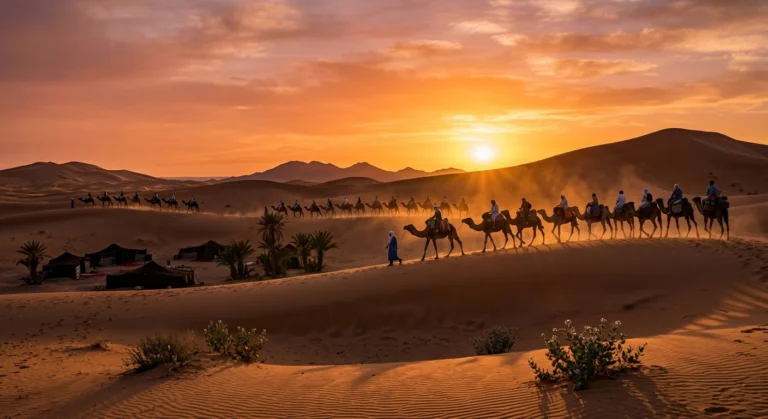
When we reach the edge of the dunes, you leave the car and ride or drive to camp. Your main suitcase stays with the vehicle. Camels carry little, and tents don’t have space for large luggage.
Your Overnight Bag Goes to Camp
Pack a small backpack or soft bag the night before we leave Marrakech, with everything you need for one night and one morning:
- A warm layer and a hat for the evening
- Pajamas or comfortable clothes to sleep in
- Toothbrush, small toiletries and any medication
- Phone, charger or power bank, and a small torch
- A change of underwear and socks for the next morning
- Wet wipes and a small towel
If you do only one thing from this article, make it this. It saves you from opening a suitcase in the sand at 10 pm, in the dark, with a flashlight in your teeth.
What the Camp Usually Provides
Knowing what’s already there stops you from overpacking. Most camps provide bedding and blankets, towels, dinner and breakfast, and drinking water.
Comfort levels vary a lot, though: some camps have private bathrooms with hot showers in each tent, others share a bathroom block, and charging points range from a socket in your tent to a single spot in the main tent. Before you pack, ask what your specific camp offers.
I always tell my guests in advance, so nobody carries a sleeping bag across the Atlas for nothing, or arrives expecting a hair dryer socket that doesn’t exist. If comfort matters a lot to you, it’s worth choosing your camp carefully rather than packing to compensate for a basic one.
Clothing: Hot Days, Cold Nights
For the Day
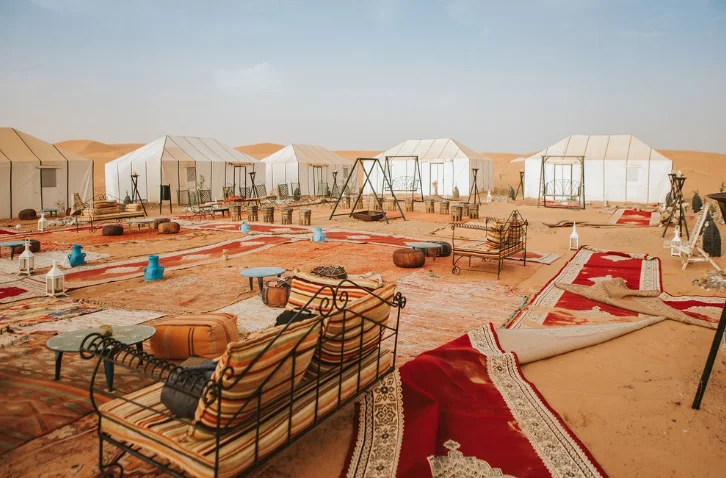
Light, loose, long clothing works better than shorts and tank tops. It protects your skin from the sun, keeps you cooler than you’d expect, and is more respectful in the villages we pass through. Cotton or linen trousers, long skirts, and long sleeved shirts in light colors are ideal.
For the Evening and Night
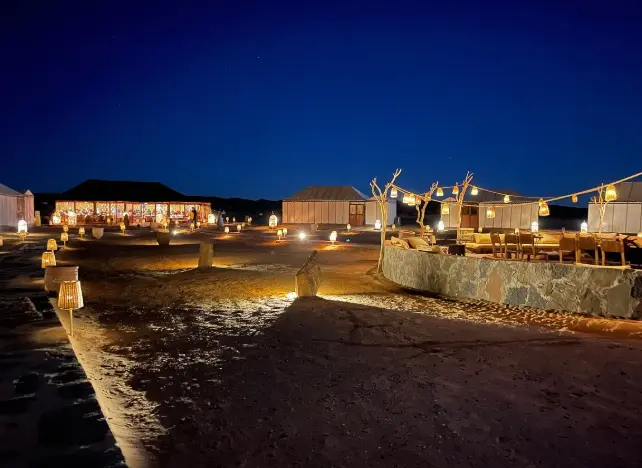
Bring a proper warm layer: a fleece or a light down jacket, plus a hat. Camps usually provide blankets, but the walk to the top of a dune for the stars, or sitting around the fire after dinner, is when you’ll feel the cold. In winter, add a second layer and warm socks.
The Cheche, Your Most Useful Item
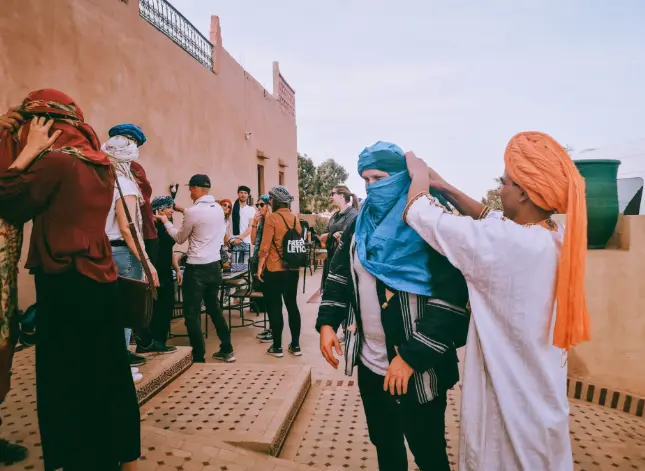
A long cotton scarf, worn around the head and face the way desert people do, protects you from sun during the day, from sand when the wind picks up, and from cold at night. You can buy one in the Marrakech souks or on the way. Ask me or your camel handler to show you how to tie it; it takes thirty seconds.
Shoes
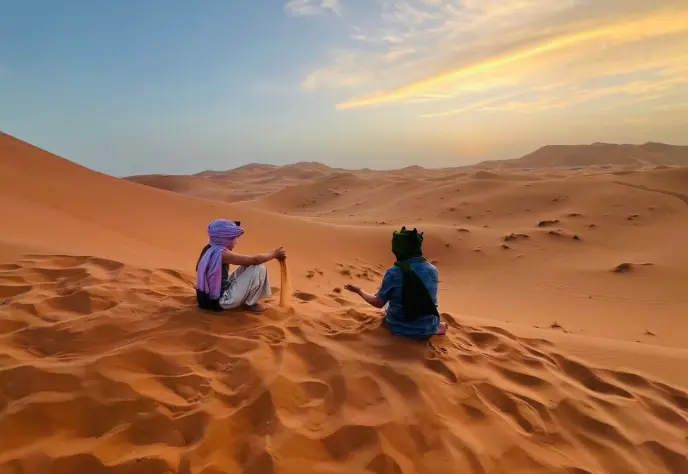
Closed, comfortable shoes for the road and the gorges, since you’ll walk on uneven ground at Aït Ben Haddou and in Todra Gorge. On the dunes themselves, many people end up barefoot, but only once the sand has cooled. Sandals are fine as a second pair, not your only pair.
| LOCAL TIP FROM AYOUB “Wear your warmest layer on the camel ride to camp, even if it feels too warm when you set off. By the time you arrive, the sun is dropping and the temperature falls fast. People who pack their fleece in the bag always end up digging for it in the dark. Put it on at the car and you’ll thank me an hour later.” |
Gear and Electronics
Power and Charging
Morocco uses plug types C and E, and according to Electrical Safety First’s advice on travel adaptors for Morocco, the supply is 220 V at 50 Hz. Travelers from the UK, the US, Canada and Australia need an adaptor. Charging options at camps vary a lot, so bring a charged power bank rather than counting on a socket in your tent.
Camera and Sand
Fine sand gets into everything. Keep your camera in a zip bag when you’re not using it, and avoid changing lenses in the wind. A simple blower brush helps clean the lens in the evening.
A Headlamp or Small Torch
Camps have some lighting, but the path between your tent and the bathroom, or up a dune to see the stars, is dark. A headlamp leaves your hands free.
Drones: Leave Them at Home
This one matters. The UK government’s Morocco travel advice on flying drones says you need permission from the Directorate General for Civil Aviation to fly one, and you risk fines and confiscation without it. Every season, I meet travelers who hoped to film the dunes from above and lost their drone at the airport. Don’t bring one.
Health, Sun and Comfort
- Sunscreen and lip balm. The sun is strong, even in winter, and the wind dries your lips quickly.
- Sunglasses. The glare off the sand is intense, and they also help when the wind lifts sand.
- Refillable water bottle. Drink regularly, especially on hot days.
- Your personal medication. Bring enough for the whole trip, plus anything you usually need for travel sickness, as the road over the High Atlas has many tight bends.
- Wet wipes and hand sanitizer. Useful on the road and at camp.
- Moisturizer and eye drops. The dry air is harder on skin and eyes than most people expect.
For money, bring dirhams in cash for tips, drinks, snacks and small purchases in the villages, and take out what you need in a larger town before reaching the desert.
What to Leave in Marrakech
- Your big suitcase, if your riad can keep it. You’ll come back to Marrakech anyway on most routes.
- Valuable jewelry. It adds nothing in the desert and you don’t want to lose it in the sand.
- Hair dryers and bulky electronics. Camp power is limited.
- Too many outfits. Two or three days on the road need less than you think; layers do the work.
- A drone, as explained above.
If you’re not coming back to Marrakech because you’re continuing north, pack for the whole journey instead. My guide to going from Marrakech to Fes via the Sahara explains how that route works.
Packing by Traveler Type
Couples. Add a small speaker or a book for the quiet evening at camp. If you’re pairing the desert with a few restful days afterward at our Marrakech retreat, pack a swimsuit and something comfortable for slow mornings.
Families. Pack snacks, a tablet for the long drives, extra layers for the children, and a small sand toy or two. Kids get cold faster than adults at night.
Photographers. Bring spare batteries (cold drains them faster), a zip bag for each camera body and a small tripod for night sky shots.
Winter travelers. Add thermal underwear, gloves and a warm hat. Camp nights in December and January are the coldest part of the year.
Summer travelers. Choose the lightest long clothing you own, a wide hat and extra water. And plan your time on the sand for early morning and late afternoon.
To understand the landscape you’re packing for, where the big dunes are, and when to climb them, read my Erg Chebbi dunes guide
Mistakes I See First Timers Make
| Mistake | Why It Matters | Fix |
|---|---|---|
| Bringing only summer clothes | Desert nights get cold, especially outside summer | Pack a fleece or light down jacket and a hat |
| Taking a big suitcase to camp | Camels and tents have no room for it | Use the two bag system: main bag stays in the car |
| Wearing sandals only | Gorges, kasbahs and hot sand are hard on bare feet | Bring closed shoes and keep sandals as a spare |
| Counting on charging at camp | Power at camps varies a lot | Bring a charged power bank |
| Packing a drone | It can be confiscated on arrival | Leave it at home |
| Forgetting cash | Tips and small village purchases are usually cash | Carry dirhams before reaching the desert |
Conclusion
Packing for the Sahara isn’t about buying special gear. It’s about layers, a small overnight bag and a few simple things that make the difference between shivering at camp and enjoying the stars. Most of what you need is already in your wardrobe.
If you’d like help planning the rest, from the route to the camp that suits you, have a look at our private tour experiences and tell me when you’re traveling. I’ll tell you exactly what the weather will ask of you.
Frequently Asked Questions
Light, loose, long clothing during the day, closed shoes, a scarf for sun and sand, and a warm layer for the evening. Covering shoulders and knees is also more respectful in the villages along the route.
Yes, especially from late autumn to early spring. The temperature drops quickly after sunset, so bring a fleece or down jacket and a hat, even if the days feel hot.
Usually not. Most camps provide bedding and blankets. Ask your camp before packing, and still bring a warm layer.
No, not without official permission. You need authorization from Morocco’s civil aviation authority to fly one, and drones without it risk being confiscated.