Where to stay in Marrakech: a local’s guide to riads, hotels and neighbourhoods
If you’re wondering where to stay in Marrakech, here’s the short version:
- First visit: A riad inside the medina, within a 10 to 15 minute walk of Jemaa el Fna.
- Couples: A small riad in Mouassine or the Kasbah, or a quiet villa in the Palmeraie if you want to rest.
- Families: A hotel in Hivernage or the Palmeraie with a proper pool and car access to the door.
- Modern comfort: Gueliz, for cafes, restaurants, shops and taxis outside your door.
- Good to know: Most medina riads have no car access, so someone has to walk you and your bags in. Ask before you book.
I’m Ayoub, I was born in Marrakech and I’ve grown up in these streets. Guests ask me where to stay more than any other question, usually after they’ve already booked the wrong place. This is what I tell my friends.
On This Page
- Riad or hotel: what’s the real difference
- The medina, quarter by quarter
- Outside the walls: Gueliz, Hivernage and the Palmeraie
- Where I’d put you, depending on who you are
- Five things to check before you book
- Mistakes I see first timers make
- Conclusion
Riad or hotel: what’s the real difference
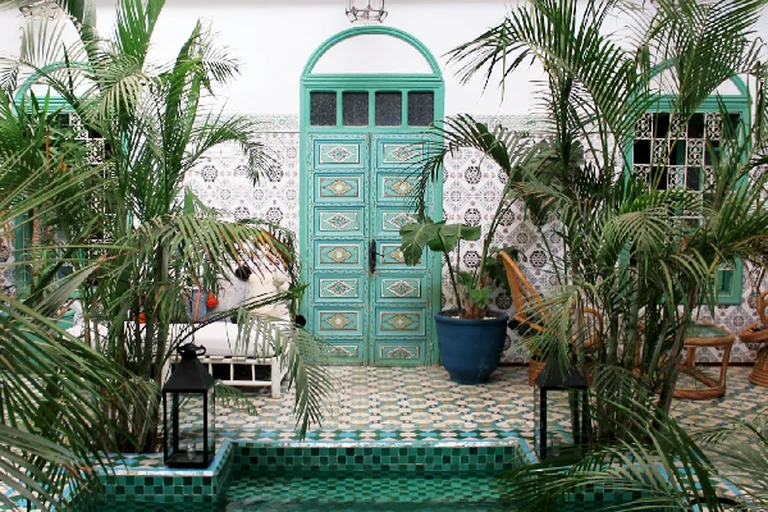
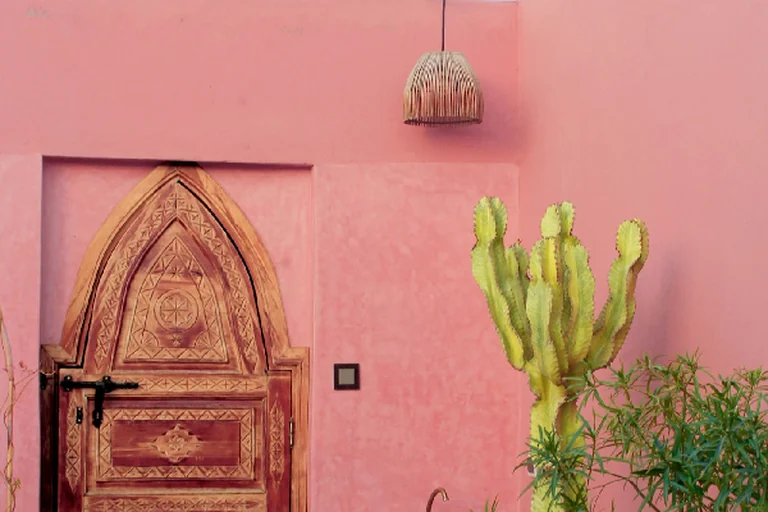
A riad is a traditional Moroccan house built around an inner courtyard, usually with a garden or a fountain in the middle and rooms opening onto it. From the lane outside you see a plain wall and a wooden door. Inside, it’s quiet, green and cool. Most riads you can book today are old family homes turned into small guesthouses, often with somewhere between a handful and a dozen rooms.
A hotel is what you’d expect anywhere: a reception desk, a big pool, a gym, a car park, staff who rotate shifts. Marrakech has excellent ones, mostly outside the medina walls.
| Riad | Hotel | |
| Location | Mostly inside the medina | Mostly Gueliz, Hivernage, Palmeraie |
| Size | Small, intimate | Larger, more anonymous |
| Pool | A plunge pool at best, sometimes none | Usually a real swimming pool |
| Car access | Often none, a walk through the lanes | Car to the door |
| Breakfast | Usually included, often on the roof terrace | Buffet, sometimes extra |
| Noise | Calm inside, but you’ll hear the call to prayer | Depends on the area |
| Feel | You’re living in the old city | You’re visiting it |
Why I usually say riad first
If it’s your first time, sleep in the medina for at least part of the trip. Waking up to bread being carried past your door, having mint tea on a roof terrace while the swallows circle the minarets, walking home through the lanes at night: that’s Marrakech, and you’ll miss most of it from a hotel by a ring road.
When a hotel is the smarter choice
I’ll be honest: riads aren’t for everyone. Steep, narrow staircases are hard with small children or bad knees. Sound travels around a courtyard, so thin walls and early risers can be a problem. And if your idea of a holiday is lying by a big pool between outings, you’ll be happier in a hotel. Plenty of my guests split their stay: three nights in a riad, then a few days somewhere with space to breathe.
The medina, quarter by quarter
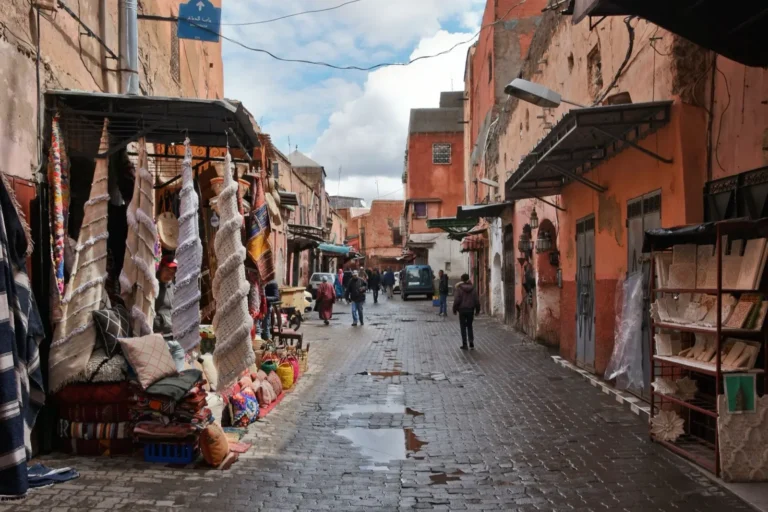
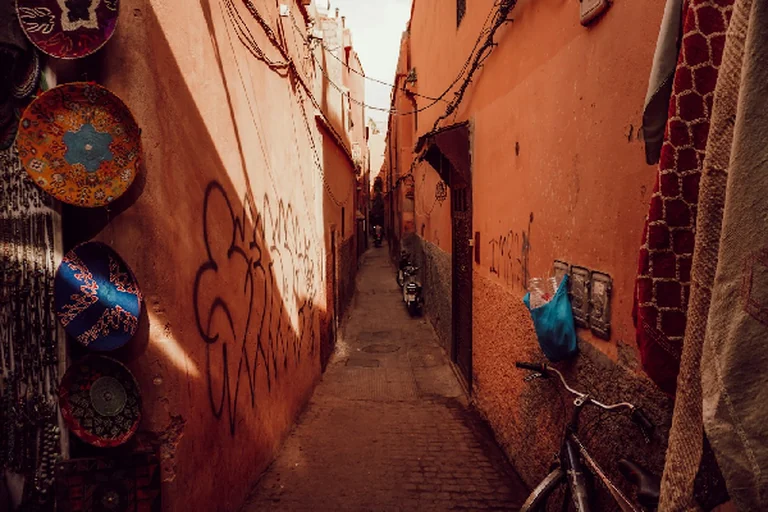
The Medina of Marrakesh has been on the UNESCO World Heritage list since 1985, and it’s bigger than most people expect. “Staying in the medina” can mean two minutes from Jemaa el Fna or 25 minutes of winding lanes from it. Here’s how I’d think about the main areas. If you want to understand the layout before you choose, my guide to the Marrakech medina goes deeper.
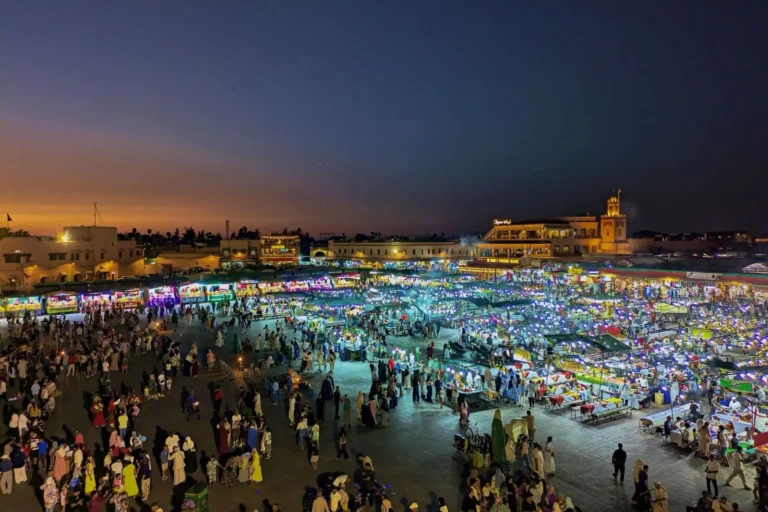
Around Jemaa el Fna
The most central spot you can get. Everything is walkable and taxis wait at the edge of the square. The trade off is noise and hustle: music late into the night, motorbikes, people trying to “help” you find your riad. Good for a short first stay, less good if you sleep lightly.
Mouassine and around the souks
My favourite for most first timers. You’re close to the souks, Le Jardin Secret and some of the best restaurants, but the residential lanes are calmer than the square. Many of the nicest small riads are here.
Riad Laarous and Bab Doukkala
Further north and west, more local, with neighbourhood bakeries and fewer tourists. Prices are often gentler. Some lanes feel quiet after dark, so I’d pick a riad close to a main street rather than deep in the derbs.
The Kasbah
In the south, near the Saadian Tombs and the royal palace. It feels more open, with wider streets, and taxis can get closer. A good balance for couples and families who want the old city without the crush of the souks.
The Mellah
The old Jewish quarter, next to the Bahia Palace. It’s changing fast, with a few new guesthouses, and it’s close to the El Badi Palace and the Mellah’s covered spice market. It’s still very much a working neighbourhood, so it suits travellers who like a bit of real life outside the door.
Outside the walls: Gueliz, Hivernage and the Palmeraie
Gueliz
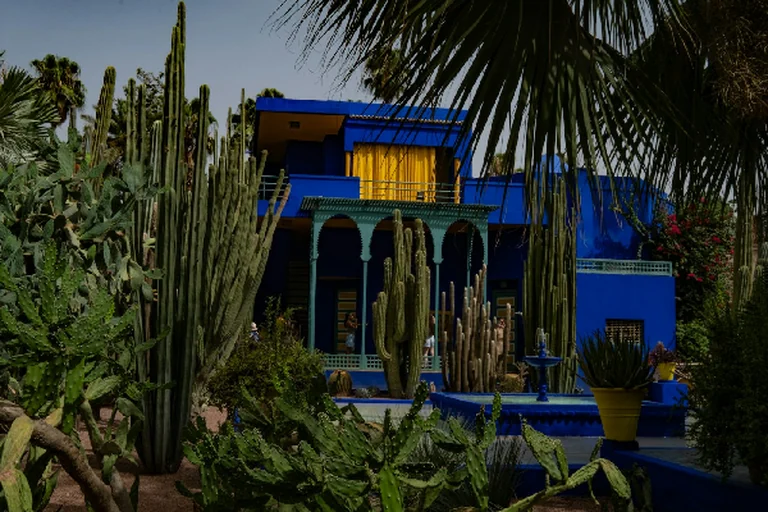
The new town the French built in the last century, and today the city’s everyday centre: wide avenues, cafes with terraces, supermarkets, galleries, bars. It’s the easiest place in Marrakech to feel at home if the medina overwhelms you. The Jardin Majorelle, the garden Jacques Majorelle began in 1923 and Yves Saint Laurent and Pierre Bergé saved in 1980, is on the edge of Gueliz, so you can walk there before the queues start. A taxi to Jemaa el Fna takes around 10 to 15 minutes depending on traffic.
Hivernage
Between Gueliz and the medina walls, this is where you’ll find the big international hotels, a lot of the nightlife and the Palais des Congrès. It’s green, calm in the day and lively at night. Good for families who want a proper pool and for anyone who likes a hotel bar more than a rooftop with mint tea.
The Palmeraie
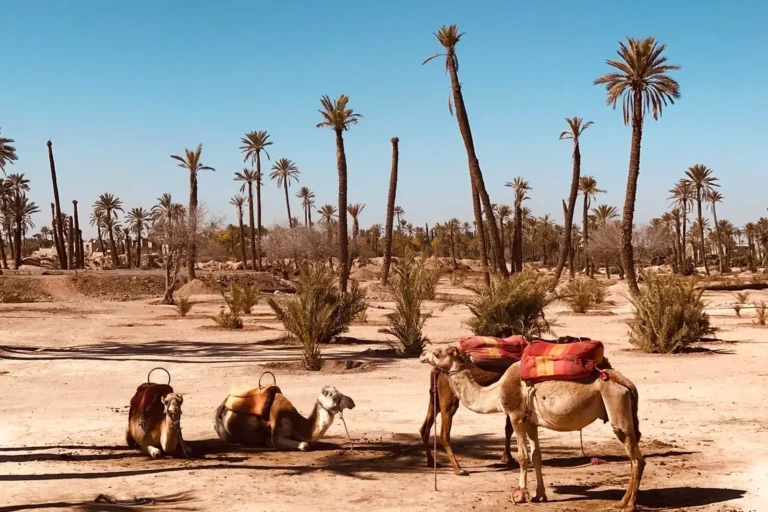
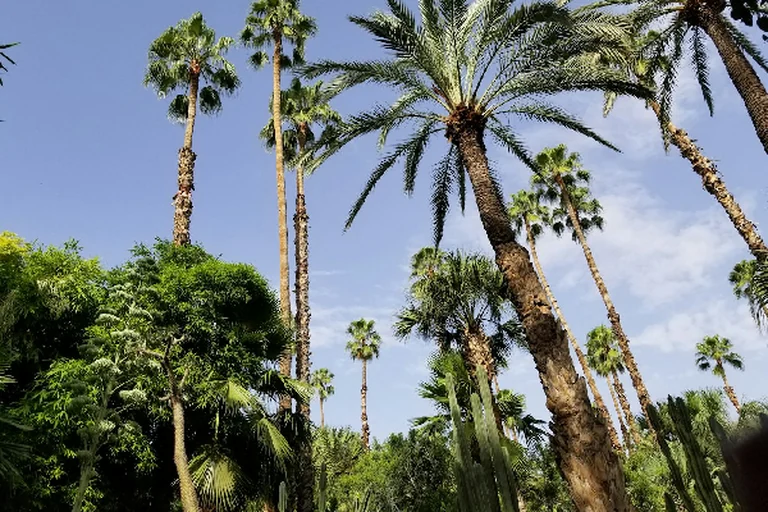
A palm grove on the northern edge of the city, full of villas, resorts and golf courses. You come here to rest, not to explore. It’s lovely for a honeymoon or a slow few days, but you’ll depend on a car or the hotel shuttle to get anywhere, and those trips into town add up.
Staying outside Marrakech
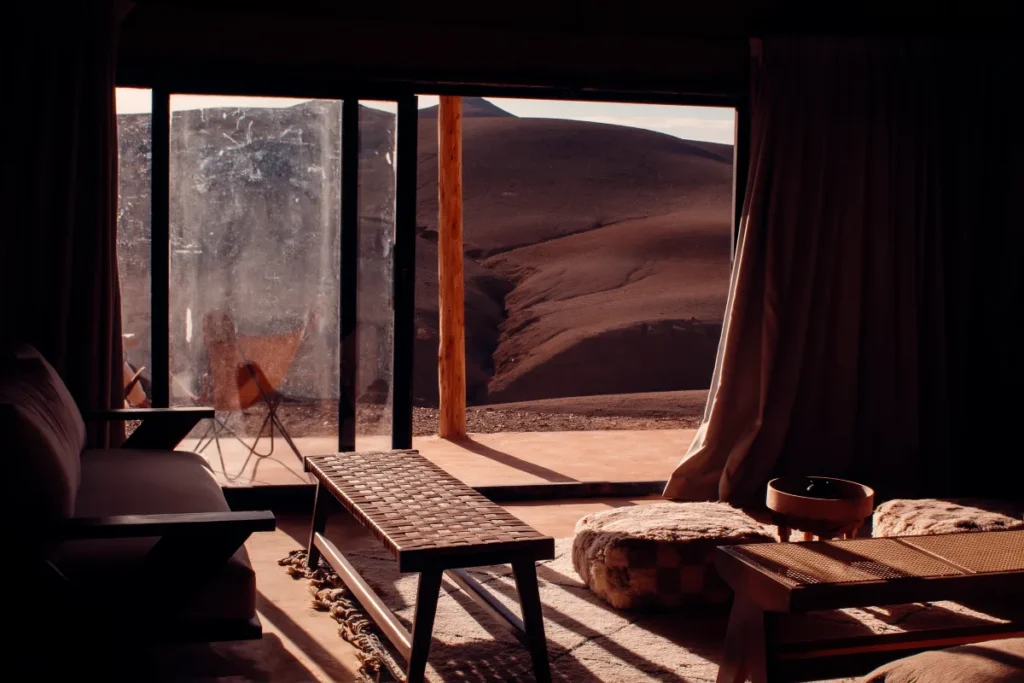
Some of my favourite nights aren’t in the city at all. A night in a camp in the Agafay desert, under an hour’s drive away, gives you silence and stars. In the Atlas, a guesthouse in Imlil or the Ourika valley is cool in summer and wakes you up to the sound of the river. I’d add one of these at the end of a city stay rather than replace it.
Where I’d put you, depending on who you are
First time in Marrakech: a riad in Mouassine or near the souks, three or four nights. Close enough to walk everywhere, calm enough to sleep.
Couples: a small riad with a roof terrace in the Kasbah or Mouassine, then two nights somewhere quiet. If slow mornings, a hammam and a long lunch are the point of the trip, look at our Marrakech retreat, which builds the whole stay around that rhythm.
Families with young children: a hotel in Hivernage or a villa in the Palmeraie. A real pool, a lift, car access. You can still spend your days in the medina with a guide and come back to space in the afternoon.
Solo women: a well reviewed riad close to a main street, or a hotel in Gueliz. I’d avoid riads at the end of long dead end lanes for a first visit, because walking back alone late down a long, empty lane can feel uncomfortable. My honest guide on whether Marrakech is safe for tourists covers this in more detail.
Travellers on a budget: a simple riad in Riad Laarous or Bab Doukkala. You get the medina experience for less, and the bakeries and snack stalls nearby are where locals actually eat.
Nightlife and dining: Gueliz or Hivernage. The medina goes quiet surprisingly early once you leave Jemaa el Fna.
Five things to check before you book
Finding your riad the first time is a small adventure. Google Maps struggles in the medina, and taxis can’t drive into most lanes. The driver stops at the nearest gate or square and someone walks you in, often with a little handcart for the bags. Ask your riad to send someone to meet you. It’s normal, and much better than following a stranger who’ll want a tip and may take you the long way.
Winter nights are cold indoors. Riads are built to stay cool in summer, which means stone floors and open courtyards. From December to February, check that rooms have heating, not just a fan. My guide to Marrakech weather by month will tell you what to expect when you travel.
The roof terrace matters more than the room. You’ll have breakfast up there, watch the sunset and come back to it every evening. A riad with a small room and a great terrace beats the opposite.
Not every riad serves alcohol. Many don’t have a licence. If a glass of wine with dinner matters to you, ask before you book, or plan to eat out in Gueliz or Hivernage some nights.
The airport is close. Marrakech Menara is usually around 20 minutes by car from the medina, so a late flight isn’t a reason to stay out by the airport.
| LOCAL TIP FROM AYOUB “Before you book, send the riad one message: ‘How far is the nearest point a taxi can drop us, and will someone meet us there?’ If they answer quickly with a gate name and a phone number, you’re in good hands. If they’re vague, keep looking. Then for your first morning, book a half day (4 to 5 hours) with a private guide in Marrakech. Once someone has shown you the route between your door and the square, the medina stops feeling like a maze.” |
Mistakes I see first timers make
| Mistake | Why It Matters | Fix |
| Booking by photos alone | Riad photos are all courtyards and candles; they don’t show the 15 minute walk from the taxi | Check the location on a map and ask how far the car can get |
| Choosing the cheapest riad deep in the derbs | Late walks home down dark, empty lanes feel stressful on a first visit | Pay a little more to be near a main street or square |
| Staying in the Palmeraie for a city break | You spend your holiday in taxis | Keep the Palmeraie for rest days at the end |
| Ignoring the stairs | Many riads have steep, narrow staircases and no lift | Ask for a ground floor room if anyone has mobility issues |
| Expecting a big pool in a riad | Most have a plunge pool or none at all | Book a hotel if swimming is a priority |
| Not asking about heating in winter | Stone rooms get cold at night | Confirm heating for December to February |
Conclusion
The right area depends on why you came. If you’re here to feel the city, sleep in the medina, close enough to walk home from Jemaa el Fna after dinner. If you’re here to rest, go out to Hivernage or the Palmeraie and come into the old city when you feel like it.
Wherever you end up, the stay is only half of it. Our guides meet you at your riad or hotel for every tour, so the place you pick is where your days start. Have a look at our private tour experiences, tell me where you’re staying, and I’ll plan the days around it.
Frequently Asked Questions
Where should I stay in Marrakech for the first time?
In a riad inside the medina, ideally in Mouassine or near the souks, within a 10 to 15 minute walk of Jemaa el Fna. You’ll be close to everything without the noise of the square itself.
Are riads in Marrakech safe?
Yes. Riads are small, staffed and have one locked front door onto the lane, so in practice they’re very secure. Rooms are private, though you share the courtyard and terrace with other guests unless you book the whole riad.
Which areas should I avoid staying in?
No area of the tourist city is off limits, but for a first visit I’d avoid riads at the far end of long, quiet lanes and anything that needs a car for every outing if you came to explore. Read the location, not just the reviews.
How many nights should I stay in Marrakech?
Three to four nights is enough to see the medina properly and take one day trip. Add a night in the desert or the mountains if you can.
Planning a trip to Marrakech?