El Badi Palace Marrakech: Visitor Tips from a Local Guide
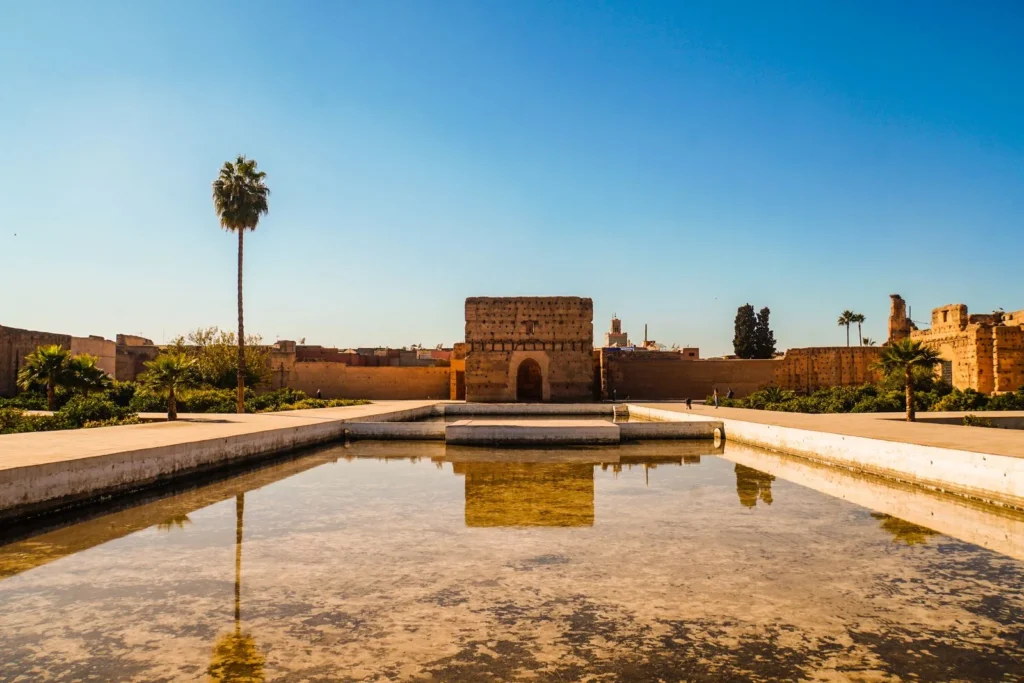
El Badi Palace is usually open daily from 9 am to 5 pm, with last entry around 4:30 pm, and most visitors need 1 to 1.5 hours. It is worth it if you like history and wide open ruins, and the entry ticket is sold at the gate.
Come at opening time or in the last two hours of the afternoon. The courtyard has almost no shade, so a midday visit in summer is hot and tiring.
Want to visit El Badi Palace with a guide?
The Story Behind El Badi Palace
Thick earth walls, empty pools and sunken gardens are all that remain of what was once the grandest reception palace in Morocco.
A Victory Palace for Ahmad al-Mansur
In 1578 the Saadian army defeated the Portuguese at the Battle of the Three Kings, near Ksar el-Kebir. Ahmad al-Mansur came to the throne that same day, and a few months later, in late 1578, work began on El Badi, “the Incomparable”. Historians believe the large ransom paid by Portugal for its captured nobles helped pay for it.
The building went on for many years. The chronicler al-Ifrani says about fifteen years, and other accounts stretch it to around 25, as al-Mansur kept adding to it until his death in 1603. Gilded ceilings, onyx and marble filled halls built to receive ambassadors.
Stripped for Meknes
The Saadians fell, and the Alaouite sultan Moulay Ismail moved his capital to Meknes. Around the end of the 17th and start of the 18th century, he had El Badi taken apart and its marble, wood and decoration carried off for his new imperial city. The walls you see are what he left behind.
The palace was damaged in the September 2023 earthquake and reopened to visitors in October 2023 after repair work. Some areas may still be under restoration when you visit.
What to See at El Badi Palace
The Great Courtyard and Sunken Gardens
The heart of the palace is a huge courtyard with a long central pool and four sunken gardens set around it, now planted with orange trees. When the pools hold water, you get a sense of the original scale.
What to look for: How deep the gardens sit below the walkways. It is often said the trees were planted low so their tops looked like a carpet from the pavilions above.
The Storks on the Walls
White storks build big nests on top of the ramparts. They are easiest to see from about February to the summer, when they are nesting and feeding their young. You will hear their beaks clattering above you.
What to look for: The nests on the highest corners of the walls, best in the early morning light.
The Koutoubia Minbar Pavilion
In a covered pavilion on the south side sits the 12th-century minbar (pulpit) of the Koutoubia Mosque. It was made in Córdoba, in al-Andalus, and is a masterpiece of carved and inlaid wood. The room is kept dim to protect it, and photography is usually not allowed inside. Ask at the gate whether the pavilion is open and included in your ticket on the day.
What to look for: The tiny geometric inlay on the side panels. When I bring guests here, I ask them to count the pieces in one star. Nobody finishes.
The Underground Passages
Below the southern part of the palace you can walk through vaulted underground corridors and rooms. They are often described as storage areas and cells for prisoners.
What to look for: The light falling through the small openings in the vaults.
The Terrace View
Climb to the upper level of the walls for a view across the whole courtyard, the medina rooftops and the Koutoubia minaret. On a clear day, especially in winter and spring, the snowy High Atlas shows on the horizon.
What to look for: The full layout of the four gardens, which only makes sense from above.
Visitor Tips: Tickets, Hours and How to Get There
Tickets are sold at the gate. Bring water, a hat and sunscreen, because the open courtyard has very little shade.
Practical Information
| Detail | Information |
|---|---|
| Entrance fee | Check the current price at the gate (included in your quote if you add it to your tour) |
| Opening hours | Usually 9 am to 5 pm daily, last entry around 4:30 pm; shorter hours during Ramadan (check before you go) |
| Time needed | 1 to 1.5 hours |
| Best time | At opening, or late afternoon; avoid midday in summer |
| Photography | Allowed in the courtyard; usually not inside the minbar pavilion |
| Accessibility | Uneven ground, steps down to the gardens and steep stairs to the terrace; little shade |
| Location | Kasbah area, next to Place des Ferblantiers, southern medina |
By taxi, ask to be dropped at Place des Ferblantiers, then walk a few minutes south through the alley to the entrance.
With or Without a Guide?
You can visit El Badi alone, but there are few signs, and without the story it can look like a big empty yard. If someone offers to guide you at the gate, ask to see their official licence card first. On our private Marrakech city tour, the entrance ticket is included in your quote, and we time the visit to avoid the midday heat.
What to Do Nearby
- Saadian Tombs: about a 5 to 10-minute walk south, built by the same sultan. Read our Saadian Tombs visitor guide.
- Bahia Palace: about a 10 to 15-minute walk through the Mellah, a decorated 19th-century palace. See our Bahia Palace visitor tips.
- Jemaa el-Fna: about a 15-minute walk north. Our Jemaa el-Fna guide explains what happens there at each time of day.
- The medina: for a wider plan, read our guide to the old city or our one day in Marrakech itinerary.
Each July the palace also hosts the National Festival of Popular Arts, with folk troupes from across Morocco performing in the courtyard. The 2025 and 2026 editions were held here. Check the dates if you travel in early July.
Conclusion
El Badi Palace is a ruin, but it tells you more about Saadian power than any restored room in the city. Go early, bring water, and pair it with the Saadian Tombs next door.
Frequently Asked Questions
Is El Badi Palace worth visiting?
Yes, if you enjoy history and open spaces. It is a ruin rather than a decorated palace, but the scale of the courtyard, the sunken gardens, the storks, the terrace view and the 12th-century Koutoubia minbar make it one of the most interesting sites in the southern medina.
How long do you need at El Badi Palace?
Allow 1 to 1.5 hours. That gives you time for the courtyard and gardens, the minbar pavilion, the underground passages and the terrace. Add a little more time if you like photography.
What are the opening hours of El Badi Palace?
It is usually open every day from 9 am to 5 pm, with last entry around 4:30 pm. Hours are often shorter during Ramadan and can change for events or restoration work, so check before you go.
When is the best time to visit El Badi Palace?
Go at 9 am or in the late afternoon. There is very little shade, so midday in summer is hot. Spring is a good season, when the storks are nesting on the walls and the Atlas is often visible from the terrace.
Is El Badi Palace good for children?
Most children enjoy the open space, the storks and the dark underground passages. Watch them near the sunken gardens and on the steep terrace stairs, which have low edges. Bring water and hats.
Planning a visit? Our licensed local guides can include El Badi Palace in a private city tour. Talk to our team to plan your day.
Want this with a Marrakech private tour guide? We plan it with you before you arrive.
Planning a trip to Marrakech?