Koutoubia Mosque Marrakech: Can Non-Muslims Go Inside?
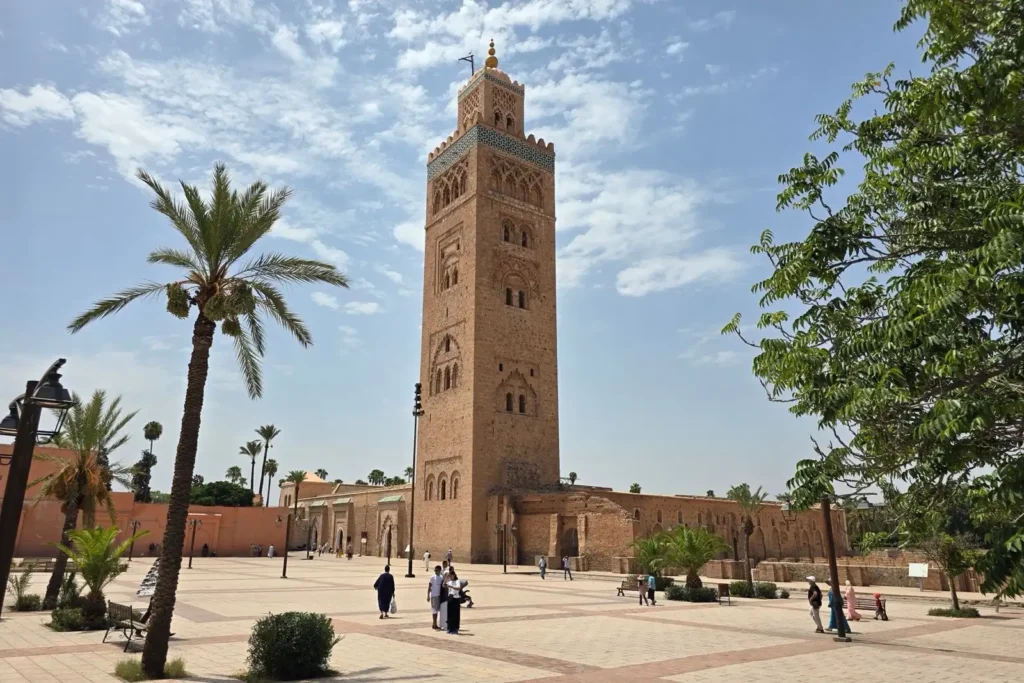
The Koutoubia Mosque is the largest mosque in Marrakech, and its 12th-century minaret, about 77 metres tall, is the city’s best-known landmark. Non-Muslims cannot enter the prayer hall. You can walk around the outside, sit in the Koutoubia Gardens and see the ruins of the first mosque, a few minutes’ walk from Jemaa el-Fna.
A visit takes 20 to 40 minutes and there is no entrance fee. Any hour works, but sunset and after dark are the best, when the call to prayer carries across the square and then the minaret is lit. We usually pair it with Jemaa el-Fna, and so do most of our guests.
Want to see the Koutoubia with a guide born and raised in Marrakech?
Koutoubia Mosque Quick Facts
| Topic | Details |
|---|---|
| Location | Western edge of the medina, a few minutes’ walk from Jemaa el-Fna |
| Built | 12th century, under the Almohad dynasty; begun by Abd al-Mu’min from 1147, minaret probably finished under Yaqub al-Mansur |
| Minaret height | About 77 metres including the spire |
| Can non-Muslims enter? | No, the prayer hall is for Muslims only; the exterior, gardens and ruins are open to everyone |
| Entrance | No entrance fee for the exterior, gardens and ruins |
| Time and best hours | 20 to 40 minutes; early morning, sunset or after dark |
| Dress | Shoulders and knees covered is appreciated near the mosque |
| Last checked | November 2026 |
Can You Go Inside the Koutoubia Mosque?
No. Like almost every mosque in Morocco, the Koutoubia is open only to Muslims, and that covers the whole interior. It is a working mosque, used for the five daily prayers and the large Friday prayer. Stay back from the entrances and do not photograph inside while people are praying.
Some visitors are disappointed by this, but as a sightseer you miss little. The minaret and its setting are what make the Koutoubia worth the walk, and you see both best from outside. If you want to see the inside of a Moroccan mosque, the Hassan II Mosque in Casablanca is one of the very few that offers guided visits to non-Muslims.
What Can You See at the Koutoubia?
The minaret, the Koutoubia Gardens, the excavated ruins of the first mosque and, five times a day, the call to prayer.
The Minaret
The minaret is a square tower of rubble stone and sandstone, once covered in plaster, about 77 metres high with its spire. Each of its four faces is decorated differently, with carved arches, geometric patterns and a band of ceramic tile near the top. On the summit sit copper globes, and our guides know several local legends about them that they like to tell at the foot of the tower. Marrakech traditionally kept new medina buildings lower than the minaret, which is one reason it still dominates the skyline.
The Koutoubia Gardens
The gardens on the west and south side of the mosque have orange trees, palms, roses, fountains and benches. Local families come in the late afternoon, and the paths give you some of the best full-length views of the minaret. It is a good place to sit for ten minutes after the noise of the medina.
The Ruins of the First Mosque
Beside the present mosque lie the excavated foundations of the first Koutoubia, with the bases of its columns laid out in rows. According to the usual account, the first mosque turned out to be slightly misaligned with the direction of Mecca, so a second mosque was built right next to it. The ruins are fenced but easy to see, and they give you a sense of how big the original building was.
The Call to Prayer
If you are near the Koutoubia at prayer time, stop and listen. The sunset call is the one guests tell us about afterwards: the minaret turns gold in the low light and the sound spreads across the square and the rooftops.
Who Built the Koutoubia Mosque?
The Almohads, a Berber dynasty from the High Atlas, who took Marrakech from the Almoravids in the middle of the 12th century. Their first caliph, Abd al-Mu’min, began the first Koutoubia in 1147 and built the present mosque beside it around 1158. Historians credit him with most of the minaret, which was probably finished under a later caliph, Yaqub al-Mansur, towards the end of that century.
The name comes from the Arabic word for booksellers, because a market of book and manuscript sellers once surrounded the mosque. The minaret became a model for Almohad architecture. Its close relatives are the Giralda in Seville, built as a minaret and later turned into the cathedral bell tower, and the unfinished Hassan Tower in Rabat.
Where Is the Original Koutoubia Minbar?
At El Badi Palace. A minbar is the pulpit from which the imam gives the Friday sermon, and the Koutoubia’s historic one is a masterpiece of Islamic woodwork, covered in fine marquetry and carving. It was made in a Córdoba workshop from 1137 for the Almoravid ruler Ali ibn Yusuf, and the Almohads later moved it into the Koutoubia. It stayed in the mosque until 1962, was restored in the 1990s and now has its own room at El Badi, where you can see it up close. Read our El Badi Palace visitor guide before you go.
Where Are the Best Photo Spots for the Koutoubia?
The gardens, Avenue Mohammed V and the rooftops around Jemaa el-Fna give the best angles:
- From the Koutoubia Gardens, looking up at the minaret framed by palms and roses
- From Avenue Mohammed V, for a straight view of the tower at the end of the street
- From the rooftop cafés around Jemaa el-Fna, especially at sunset
- From beside the ruins, with the column bases in the foreground
- After dark, when the floodlit minaret stands out against the night sky
Early morning gives the softest light and the fewest people. If you want to photograph people praying or local families in the gardens, always ask first.
Is the Koutoubia Worth Seeing at Night?
Yes. We often tell guests to come back after dinner. The minaret is floodlit, the gardens are quieter and the square nearby is at its liveliest. The walk from Jemaa el-Fna is short, well lit and full of people out strolling. As in any crowded place, keep your bag close and your phone out of easy reach.
What Should You Wear to Visit the Koutoubia?
Nothing special is needed to walk around the outside, but modest dress is appreciated near a working mosque, so cover shoulders and knees. A few other courtesies matter more than clothes:
- Do not enter the prayer hall or the mosque courtyard
- Keep your voice low near the entrances, especially during prayers
- On Friday around midday the area fills with worshippers; give them space
- Ask before photographing people
- Drones are not allowed without official permission
How Do You Combine the Koutoubia with Jemaa el-Fna?
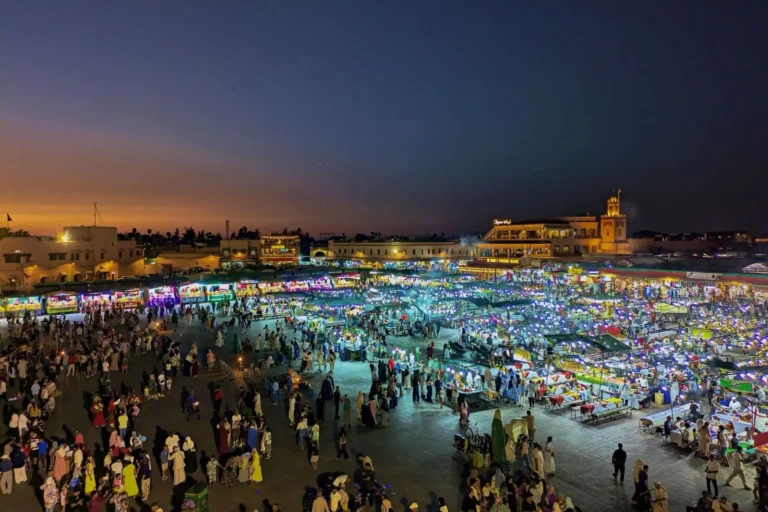
Walk from one to the other; they are a few minutes apart. Our usual plan is the minaret and gardens in the late afternoon, then across to the square as the food stalls set up and the storytellers and musicians arrive. Our Jemaa el-Fna guide explains what to expect. The souks start just north of the square, and the Bahia Palace and the Saadian Tombs are a pleasant walk to the south.
With or Without a Guide?
You can visit the Koutoubia on your own; you cannot miss it. What a guide adds is the story: the Almohads, the legends of the globes, the links to Seville and Rabat, and how the mosque fits into medina life today. Our guides grew up in these streets and point out details most visitors walk straight past.
On our private Marrakech city tour, the Koutoubia is usually one of the first stops, and your guide meets you at your riad or hotel. For a looser day, take a private guide by the half or full day and build your own route.
Frequently Asked Questions
Can tourists go inside the Koutoubia Mosque?
No. The prayer hall of the Koutoubia Mosque in Marrakech is open to Muslims only, as in almost all Moroccan mosques. Visitors of any faith can walk around the outside, look up at the 12th-century minaret, sit in the Koutoubia Gardens and view the fenced ruins of the first mosque. For a mosque interior, the Hassan II Mosque in Casablanca offers guided visits.
Is there an entrance fee for the Koutoubia?
No. The area around the Koutoubia Mosque, including the gardens and the view over the ruins of the first mosque, is public space with no ticket and no gate, so you can come at any time of day. The original Koutoubia minbar is a separate visit at El Badi Palace, where the entrance fee is paid at the gate.
How tall is the Koutoubia minaret?
The Koutoubia minaret is about 77 metres tall including its spire. It was built by the Almohads in the 12th century and was probably finished under the caliph Yaqub al-Mansur. Marrakech traditionally kept buildings in the medina lower than the minaret, which is why it still stands out on the skyline and can be seen from much of the old city.
When is the best time to visit the Koutoubia?
Early morning gives soft light and few people. Late afternoon lets you hear the sunset call to prayer as the minaret turns golden, then walk on to Jemaa el-Fna as it fills up. After dark the minaret is floodlit and the gardens are quiet. Avoid Friday around midday if you want space, as worshippers fill the area.
Where is the original Koutoubia minbar?
The Koutoubia’s historic minbar, a 12th-century pulpit made in Córdoba and later moved into the mosque by the Almohads, is displayed at El Badi Palace in Marrakech. It is a masterpiece of Islamic woodwork, decorated with marquetry and carving. El Badi Palace is in the southern part of the medina, and entrance fees are paid separately at the palace gate.
What should I wear to visit the Koutoubia?
Modest clothing, with shoulders and knees covered, for both men and women. You do not need a headscarf to walk around the outside of the Koutoubia Mosque or through its gardens. Wear comfortable shoes, because most visitors carry on to Jemaa el-Fna and the souks. On Friday around midday, give worshippers space at the entrances.
For many visitors the Koutoubia is the first landmark they see in Marrakech, and it rewards a second visit. Spend a few minutes in the gardens, listen to the call to prayer, and come back after dark to see the minaret lit up.
Would you like a guide to tell you the Koutoubia’s story on the spot?
Find our guides useful? Add Marrakech Tailor Made Tours as a preferred source on Google to see more of our Marrakech tips in your search results.
Planning a trip to Marrakech?