Menara Gardens Marrakech: Is It Worth Visiting?
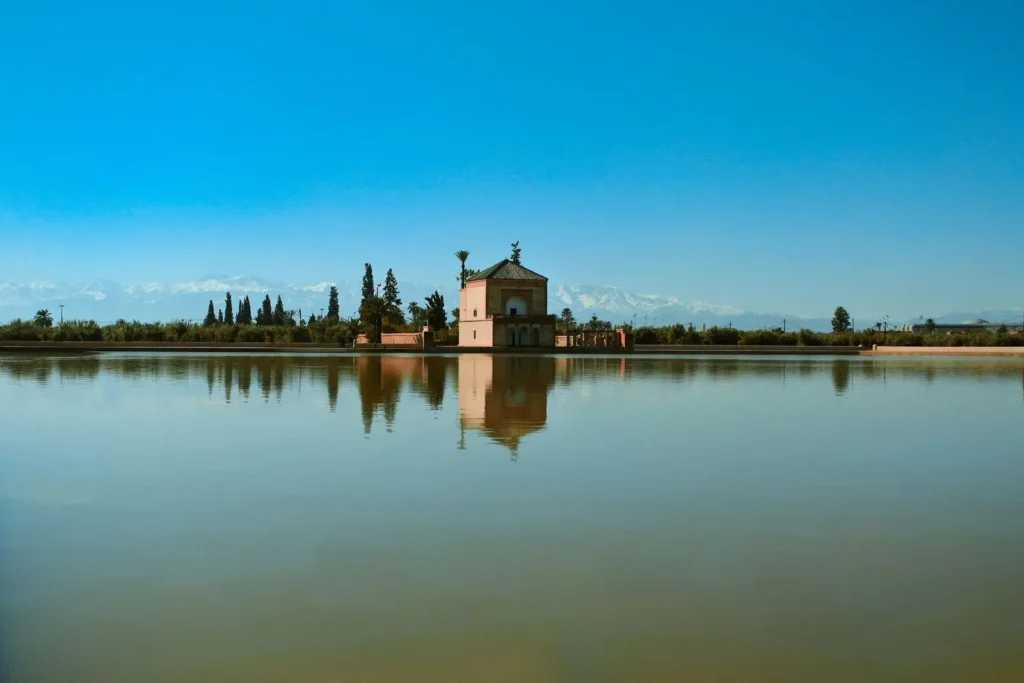
The Menara Gardens are worth visiting if you want calm, open space and one of the classic views of Marrakech: a green-roofed pavilion reflected in a 12th-century Almohad basin, with olive groves around it and, on clear days, the snowy High Atlas behind. Allow 45 minutes to an hour. It is not a flower garden like Majorelle.
Go in the late afternoon, ideally on a clear winter day, and fit Menara around other sights rather than making a special trip. If you have one day and love gardens, choose Majorelle. If you have longer, Menara shows you a quieter, more local side of the city.
Want to add the Menara Gardens to a private day in Marrakech?
Menara Gardens Quick Facts
| Topic | Details |
|---|---|
| Location | About 2 km west of the medina walls, near the airport road; 10 to 15 minutes by petit taxi |
| Built | Basin and orchards in the 12th century under the Almohads; current pavilion in the 19th century (around 1869) under the Alaouite sultan Mohammed IV |
| What you see | Large water basin, olive groves, pavilion, Atlas views |
| Time needed | 45 minutes to 1 hour |
| Entrance | Grounds open in the daytime, with hours that change by season; the pavilion has its own entrance fee, paid separately |
| Best time | Late afternoon; clear winter days for snow on the peaks |
| UNESCO | Part of the Medina of Marrakech World Heritage listing, with the Agdal Gardens |
| Last checked | November 2026 |
When Were the Menara Gardens Built?
The basin and orchards date from the 12th century, under the Almohad dynasty, the same rulers who built the Koutoubia minaret. The Almohads were skilled water engineers. They made the great rectangular basin to store water tapped from groundwater towards the High Atlas and carried through underground channels called khettaras, and used it to irrigate the orchards around it.
Local stories say soldiers learned to swim in the basin before crossing the sea to Andalusia. Our guides enjoy telling it, though historians treat it as legend. The pavilion with its pyramid-shaped green tile roof came much later. The Saadians built an earlier one, and the pavilion you see today dates from the 19th century, usually given as around 1869 under the Alaouite sultan Mohammed IV, of the dynasty that still rules Morocco. Sultans used it as a place to rest in the cool air by the water.
Together with the Agdal Gardens south of the royal palace, the Menara is included in the UNESCO World Heritage listing of the Medina of Marrakech.
What Will You See at the Menara Gardens?
A large basin, a 19th-century pavilion, rows of olive trees and, on clear days, the High Atlas.
The Basin and the Pavilion
The basin is the centre of everything, with the pavilion standing at its edge. The classic view, the one on the postcards, is from the far side of the water, looking across to the pavilion with the mountains behind. On still days the pavilion reflects cleanly in the water. You may see carp in the basin and local families feeding them.
The pavilion has a small upper room with a balcony over the basin. Access and opening can vary, so check on the day. Even if it is closed, the view from outside is the main reason to come.
The Olive Groves
Wide olive groves surround the basin, planted in neat rows and crossed by long, straight paths. They are shady and quiet, and they show the working side of Moroccan gardens: these were orchards first and places of leisure second. A walk along the paths is a good way to get away from the traffic for half an hour.
The Atlas Mountain Views
On a clear day, especially from December to March, the snowy High Atlas rises behind the pavilion. It is one of the best mountain views you can get without leaving Marrakech. In hazy summer weather the mountains can disappear completely, which is worth knowing before you go. Our Marrakech weather by month guide explains what to expect in each season.
When Is the Best Time to Visit the Menara Gardens?
Late afternoon. The heat drops, the light turns golden on the pavilion and the water, and Marrakchi families come out for a walk. Early morning is quiet too. Avoid midday in summer: it is hot, and there is little shade near the basin.
For the snow-capped view, choose a clear, crisp day in winter or early spring, ideally after rain has cleaned the air. Weekends and public holidays bring more local visitors, which is part of the atmosphere but means more people in your photos.
Is the Menara Worth Visiting? Our Honest Verdict
Yes, for the right visitor. The Menara is worth it if:
- You enjoy calm, open spaces and want a break from the medina
- You want to see the Atlas Mountains from the city on a clear day
- You are interested in history, water engineering and how Marrakech was fed
- You are passing nearby, for example on the way to or from the airport
It may disappoint you if you expect colourful flowerbeds, tropical planting or a lot to see. The grounds are simple and can look dusty in summer, and there are no exhibits. Visitors who arrive expecting another Majorelle sometimes leave underwhelmed. Those who come for the view, the light and the quiet usually love it.
Menara vs Majorelle vs Agdal: Which Garden Should You Visit?
If you have time for one garden, choose Majorelle. Choose the Menara for space, history and the mountain view, and the Agdal only if its opening days fit your trip.
Majorelle Garden
A lush, colourful botanical garden with cactus, bamboo, the cobalt blue villa and the Berber Museum. It is compact and usually busy, and tickets are sold online only, so buy them before you go. Read our Majorelle Garden visitor guide.
Menara Gardens
Open, calm and historic, with a big view and a local atmosphere, and very little planting beyond the olive trees.
Agdal Gardens
The Menara’s larger sister, with vast orchards and basins south of the royal palace. Its days open to the public are limited and can change at short notice, so check locally before you plan a visit.
How Do You Get to the Menara Gardens from the Medina?
By petit taxi, in around 10 to 15 minutes from the Koutoubia or Jemaa el-Fna. The Menara is about 2 kilometres west of the medina walls. Ask the driver to use the meter or agree the fare before you get in. Walking is possible, but the route along wide avenues is dull and can be hot. If you are combining the Menara with other sights, a guide or driver for the afternoon saves you finding taxis between each stop.
What Can You Combine with the Menara?
Its position between the airport and the medina makes it easy to pair:
- The Koutoubia Mosque and its gardens, on the way back towards the medina
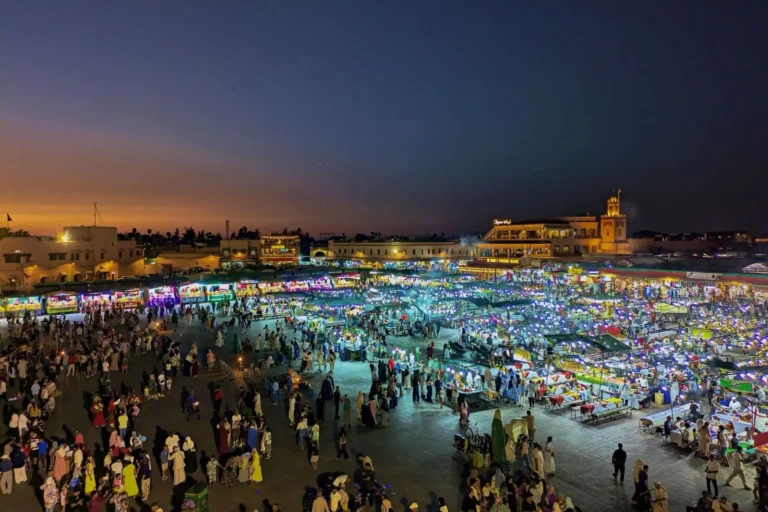
- Jemaa el-Fna at sunset, a short taxi ride away; see our Jemaa el-Fna guide
- A drive through Hivernage and Gueliz, the modern districts
- Your arrival or departure day, as the gardens are close to the airport
For more ideas on building a day, see our best things to do in Marrakech.
With or Without a Guide?
You can easily visit the Menara on your own. A guide is most useful for the story behind it: how the Almohads brought water down from the mountains, how the khettara channels worked and why the gardens mattered to the city’s survival. Our guides, born and raised in Marrakech, often fit the Menara into a flexible day with the Koutoubia and the medina.
With a private guide by the half or full day, you set the pace and we plan the route around the light and the opening hours. Entrance fees are paid separately at each site.
Frequently Asked Questions
Are the Menara Gardens free?
The grounds are a public park where local families come to walk and picnic, and the 19th-century pavilion has its own entrance fee, paid separately. Opening hours and entry arrangements for both change from time to time, so check on the day or ask your riad before you go.
How long do I need at the Menara Gardens?
Around 45 minutes to 1 hour is enough to walk around the Almohad basin, look at the pavilion, stroll through the olive groves and photograph the Atlas view. Stay longer if you want to sit and watch the light change in the late afternoon. Most visitors combine the Menara with the Koutoubia or Jemaa el-Fna.
Is the Menara better than Majorelle?
They are very different. Majorelle is a compact, colourful botanical garden with cactus, bamboo and the cobalt blue villa, and tickets are sold online only. The Menara is a large, open Almohad basin and olive grove with a pavilion and mountain views. If you only have time for one, most visitors prefer Majorelle; the Menara suits a slower second or third day.
When can you see the Atlas Mountains from the Menara?
On clear days, mostly from late autumn to spring. December to March gives the best chance of snow on the High Atlas peaks behind the pavilion, especially on crisp mornings or late afternoons after rain has cleared the air. In hazy summer weather the mountains can disappear completely, so look at the sky before you set off.
How do I get to the Menara Gardens?
Take a petit taxi from the medina; the ride from the Koutoubia or Jemaa el-Fna takes around 10 to 15 minutes. Ask the driver to use the meter or agree the fare before you get in. Walking is possible, about 2 kilometres along wide, sunny avenues.
Who built the Menara Gardens?
The Almohad dynasty created the Menara basin and orchards in the 12th century, storing water carried through underground khettara channels that tapped groundwater towards the High Atlas. The current pavilion beside the basin dates from the 19th century (around 1869) under the Alaouite dynasty, which still rules Morocco. The gardens are part of the UNESCO-listed Medina of Marrakech.
The Menara will not overwhelm you, and we think that is the point. Come in the late afternoon, walk around the water, watch the light change on the pavilion and, if the sky is clear, look for snow on the Atlas behind it.
Would you like a local guide to plan a relaxed day around Marrakech’s gardens?
Find our guides useful? Add Marrakech Tailor Made Tours as a preferred source on Google to see more of our Marrakech tips in your search results.
Planning a trip to Marrakech?