Aït Ben Haddou: A Local’s Guide to the UNESCO Ksar and Film Sets

Aït Ben Haddou is a long day trip from Marrakech, about 7 hours of driving in all, and you can do it without an overnight stay. In just one day, you can:
- Cross the scenic High Atlas mountains via the historic Tizi n’Tichka pass.
Walk through the UNESCO-listed ksar to explore ancient mud-brick architecture.
Climb to the hilltop granary for panoramic views of the Ounila Valley.
Spot famous filming locations from Gladiator and Game of Thrones.
Expect about 7 hours of driving in total (3.5 hours each way), back in Marrakech by evening.
The first time the ksar appears around the bend of the N9 road, most people ask the driver to pull over. It rises out of the valley floor in the same red-ochre as the earth around it: six clustered kasbahs stacked up a hillside.
Travelers who expect “another kasbah” often come back saying it was the image that summed up their whole trip.
On This Page
- Why Aït Ben Haddou Is Unlike Any Other Day Trip from Marrakech
- Walking Through the Ancient Ksar: What You’ll Experience
- The History and Culture of Ksar Aït Ben Haddou
- What to Eat During Your Visit
- The Best Photo Spots You Shouldn’t Miss
- What to Focus On, Depending on Who You Are
- Local Tips You Won’t Find in Every Travel Guide
- Planning the Trip from Marrakech
- Common Mistakes Visitors Make
- Conclusion
Why Aït Ben Haddou Is Unlike Any Other Day Trip from Marrakech
Most Moroccan kasbahs are single fortified houses. Aït Ben Haddou is a ksar, an entire fortified village built from pisé (rammed earth), standing on the old trans-Saharan caravan route. The site is believed to be centuries older, but the buildings you see today date from the 17th century onward.
UNESCO inscribed it as a World Heritage Site in 1987, and describes it as a striking example of the architecture of southern Morocco, according to the official UNESCO listing.
If you are still at the planning stage and want the wider picture of the area rather than the day trip itself, our Aït Ben Haddou destination guide covers the seasons, what the valley looks like month by month, and how the ksar fits alongside Ouarzazate and the Ounila valley.
It is the better starting point if you have not decided yet how many days to give this part of Morocco.
Walking Through the Ancient Ksar: What You’ll Experience

Crossing the River and Entering the Fortress
You cross the Ounila riverbed first, on a footbridge or by stepping-stones, before the baffle gate and angled walls come fully into view.
Exploring the Narrow Earthen Streets
Inside, alleys narrow to shoulder-width, lined with mud-brick walls and small family-run shops selling fossils, carpets, and sand paintings.
Climbing to the Hilltop for the Best Panorama
The real payoff is the 15–20 minute climb to the old collective granary, where the Ounila valley opens out toward the High Atlas. Don’t skip it.
Discovering Local Crafts and Small Shops
On the way down, slow through the artisan stalls; a short chat with the shopkeepers usually says more about daily life here than any placard.
Local Tip from Ayoub:
There is no shade inside the ksar and no shop selling water above the second gate. People start the granary climb with an empty bottle because it only looks like a twenty-minute walk from below. Buy two litres per person at the riverside stalls before you cross, even in October.
The History and Culture of Ksar Aït Ben Haddou
Long before cameras arrived, Aït Ben Haddou was a checkpoint on the caravan road linking the Sahara to Marrakech, settled by Amazigh (Berber) families whose homes cluster behind one defensible wall.
The pisé walls need constant upkeep, which is why CERKAS, the government heritage body responsible for conserving earthen architecture in the region, leads ongoing preservation here.
Ouarzazate itself, just down the road, has built its modern identity around this same earthen-building tradition alongside its film industry.
What to Eat During Your Visit
Most day trips build in a lunch stop either inside the ksar or just across the river, and it’s worth timing your visit around it rather than treating food as an afterthought.
- Berber tagine is slow-cooked lamb or chicken with preserved lemon and olives, served in the clay pot it was cooked in.
- Moroccan couscous is traditionally served on Fridays after prayers, though restaurants along the river prepare it daily for visitors.
- Local pastries, almond briouats and dates, often offered alongside tea at family-run stalls.
Back in Marrakech that evening, some travelers like to keep the day going with a private Marrakech Medina tour, wandering the souks and food stalls after the long drive back. While you’re in the Medina, our Bahia Palace visitor guide is a good next stop if you still have energy for one more historic site.
The Best Photo Spots You Shouldn’t Miss
- The riverbank, looking back at the ksar gives the classic wide shot, best in early morning or late afternoon side-light.

- The hilltop granary is a full panoramic sweep of the ksar and valley; arrive near sunset for the deepest color in the walls.

- The narrow alleys are best mid-morning, when soft light filters between the walls without harsh shadows.
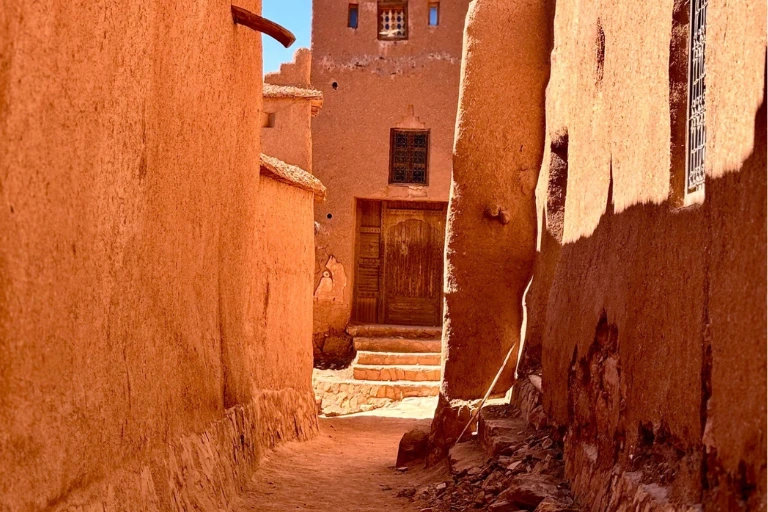
- Hidden side courtyards are worth asking about. Many shopkeepers will let you peek through a doorway for a small tip.

- From the footbridge you get a low angle with the water and the fortress walls in one frame.
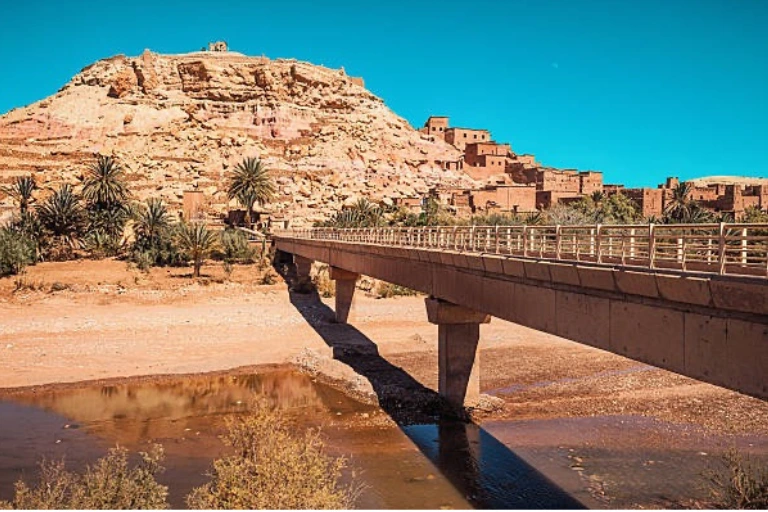
A quick tip most guidebooks skip: bring a lens cloth. The fine dust that gives the ksar its color also settles fast on camera gear.
What to Focus On, Depending on Who You Are
For History Lovers
The caravan route backstory and CERKAS preservation work give real depth beyond the postcard view. Ask your guide about the trade routes.
For Photographers
Golden hour from the granary puts warm, low light on the earthen walls, and it is worth planning your whole day around.
For Adventure Seekers
If the granary climb leaves you wanting more altitude, the High Atlas delivers it on a different axis entirely. Imlil sits about 65 km south of Marrakech, in the opposite direction from Aït Ben Haddou, and works best as a separate day.
Our guide to an Imlil day trip from Marrakech covers the trailheads, the walking times, and what the village looks like outside the trekking season.
For Movie & TV Fans
Spotting exact Game of Thrones and Gladiator filming spots turns the walk into a scavenger hunt; local guides who worked as extras add details you won’t find online.
For Families
The climb is manageable for most ages with a few rest stops, and kids tend to love the river crossing and the maze-like alleys.
Local Tips You Won’t Find in Every Travel Guide
- Best time to visit: before 10am or after 4pm, for light and to dodge the tour-bus crowds.
- What to wear: closed, grippy shoes, because the granary climb is on uneven stone.
- Cash or card: cash only inside the ksar for tips, stalls, and guides.
- Respecting local culture: ask before photographing residents, and dress modestly.
- Local-favorite viewpoint: the terrace one level below the granary summit often beats the very top.
- Short on time or traveling with kids? The closer Agafay Desert day trip asks a lot less of your schedule.
Planning the Trip from Marrakech
Aït Ben Haddou is about 190 km from Marrakech, roughly 3.5 hours each way over the Tizi n’Tichka pass, so most people go with a private driver rather than self-drive. For the route, best season, where to stay and how to plan a private day trip, see our Aït Ben Haddou destination page. If you’d rather have every detail arranged for you, our tailor made tours page shows how we plan a full private day.
Common Mistakes Visitors Make
- Arriving at midday: Avoid the hottest hours, as the harsh sun flattens colors and offers little shade. Come before 10 am or after 4 pm instead.
- Skipping the viewpoint: Don’t miss the panoramic views just because group tours skip the climb. For most people the view from the top is the best part of the day.
- Forgetting cash: Bring plenty of physical currency, as there is no reliable card payment inside. You will need cash for guides, local shops, and tips.
- Trying to cram in too much. Bolting on a full Atlas Mountains day trip the same day usually means rushing both. They work better as separate days.
Conclusion
Aït Ben Haddou earns its reputation the moment it comes into view, but it rewards travelers who give it real time rather than a rushed photo stop. Climb to the granary, talk to the artisans, and time your visit around the light.
Frequently Asked Questions
Is Aït Ben Haddou worth visiting on a day trip?
Yes, it’s the most famous ksar in Morocco, though an overnight in Ouarzazate allows a slower visit.
How much does it cost to enter Aït Ben Haddou?
Walking through is generally free; some houses and small museums inside ask for a small fee.
What should I wear to visit Aït Ben Haddou?
Closed, grippy shoes, sun protection, and modest clothing out of respect for the resident community.
Do people still live in Aït Ben Haddou?
A small number of families still live inside the ksar; most residents moved across the river decades ago.
What movies were filmed at Aït Ben Haddou?
Gladiator, Lawrence of Arabia, The Mummy, Kingdom of Heaven, Prince of Persia and Game of Thrones, where the ksar appeared as the city of Yunkai.
Planning a trip to Marrakech?