Moroccan tagine guide: what a Marrakech local wants you to know before your first one
If you’re wondering what to know before your first tagine, here’s the short version:
- What it is: Both the clay pot with the cone shaped lid and the slow cooked stew made in it.
- Taste: Warm and fragrant rather than hot. Ginger, saffron, cumin, cinnamon, not chilli.
- First one to order: Chicken with preserved lemon and olives, then beef or lamb with prunes.
- How to eat it: With your right hand and a piece of bread, from your side of the dish.
- Where it’s best: In a home kitchen, or at a roadside grill in the Atlas where it’s been on the coals all morning.
- Good to know: In Morocco tagine comes with bread, not rice or couscous. Couscous is a separate dish.
I’m Ayoub. I grew up in Marrakech eating my mother’s tagine almost every day, and I’ve eaten hundreds since with guests in the medina and the mountains. Most visitors try one on their first night, in a tourist restaurant, and find it disappointing. This guide covers what to order and where, so your first one is a good one.
On This Page
- What a tagine actually is
- The tagines you’ll meet in Marrakech
- How a tagine is cooked, and how to eat it
- Tagine, tanjia or couscous?
- Where to eat a good one
- Mistakes I see first timers make
- Conclusion
What a tagine actually is
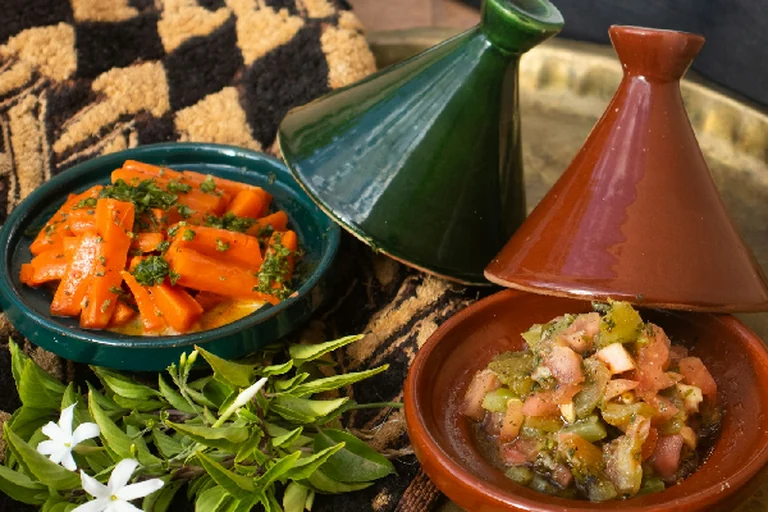
The word means two things at once. First, the pot: a shallow round clay dish with a tall cone shaped lid. Second, whatever is slowly cooked inside it. When my aunt says “there’s tagine for lunch”, she’s talking about the food. When the potter in the souk says “good tagine”, he means the pot.
The lid is the clever part. Steam rises into the cone, cools, and drips back down onto the meat, so the dish cooks in its own juices with very little water. Britannica’s entry on the tagine describes it as a North African vessel, and it is often traced back to Berber nomads, who used it as a portable oven. That makes sense to me. You need a small fire, one pot and a few hours, and you have dinner.
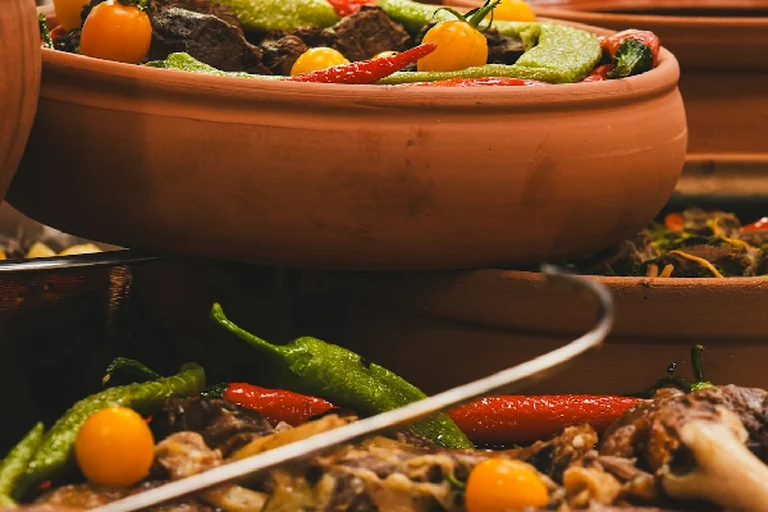
What goes in is simple: meat or vegetables, onions, olive oil, spices, and often something sweet or sour to balance it. What makes it good is time: a beef tagine can sit on the coals most of the morning.
The tagines you’ll meet in Marrakech
Menus can list a dozen, but you’ll see the same handful again and again. These are the ones I’d try, in roughly this order.
Chicken with preserved lemon and olives
The one I tell everyone to start with. Chicken cooked slowly with ginger, saffron, onions and garlic, then finished with green olives and preserved lemon, which tastes bright and a little salty, nothing like fresh lemon. When it’s done well, the sauce is thick and golden and you’ll want more bread.
Beef or lamb with prunes and almonds
Sweet and savoury, the way Moroccans love it for celebrations. The meat falls apart, the prunes go soft and sticky with honey and cinnamon, and toasted almonds or sesame go on top. Some people find it too sweet the first time. Try it anyway.
Kefta with eggs
Small spiced meatballs in a tomato sauce, with eggs cracked over the top at the end. It’s quicker than the others and it’s what a lot of Marrakchis eat for a casual lunch. Very good with a lot of bread and very good value.
Vegetable tagine
Carrots, potatoes, courgettes, peas, sometimes pumpkin, arranged in a cone and cooked in olive oil and spices. In the mountains this is the everyday version, and in a village home it can be the best thing you eat all trip.
Fish tagine
You’ll find better fish tagine on the coast than in Marrakech. If you’re doing an Essaouira day trip, that’s the place to order it, with whatever came off the boats that morning, cooked with tomatoes, peppers and chermoula.
Seasonal tagines
In spring, look for lamb with artichokes and peas. In winter, some homes make tagines with quince. These rarely appear on tourist menus, which is a shame, because they’re some of the best.
How a tagine is cooked, and how to eat it
Low heat, a lot of patience
At home, the tagine sits on a small clay brazier with charcoal, or on the lowest flame of the gas. Onions and oil go in first, then the meat and spices, then the lid. After that you mostly leave it alone. A chicken tagine needs about an hour or two. Beef or lamb with prunes takes longer, often most of the morning.
That’s why the best tagines are rarely made to order. In the Atlas, roadside grills line up dozens of tagines on the coals from early morning, so by lunchtime they’re ready. In a restaurant that promises one in 15 minutes, it was probably cooked in a pressure cooker and moved into a pretty pot for the photo.
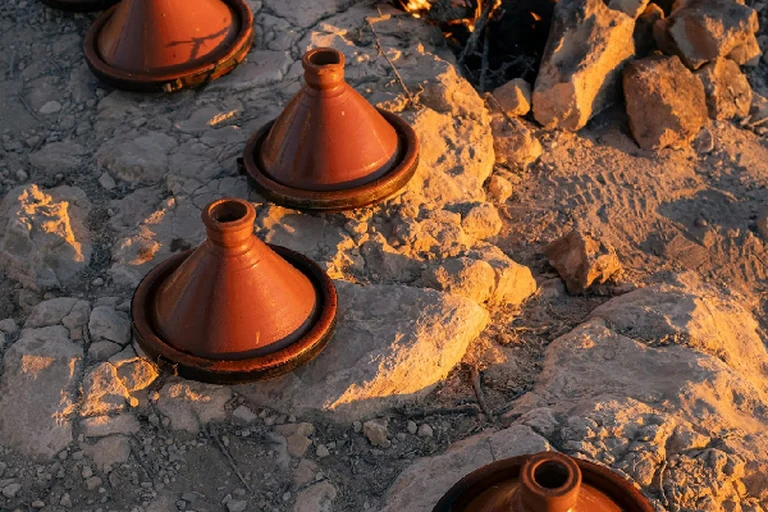
Eating it the Moroccan way
The tagine comes to the middle of the table and everyone eats from it. Here’s how it works:
Bread is your spoon. Tear off a piece of khobz, pinch it around a bit of meat and sauce, and lift. Nobody expects you to be good at it on day one.
Use your right hand. The left is traditionally kept for other things. If you’re left handed, nobody will make a scene, but locals will notice.
Eat from your side. Imagine the dish cut into slices like a cake. Yours is the one in front of you. Reaching across is the tagine version of taking food off someone’s plate.
Let the host share the meat. In many homes the vegetables and sauce come first, and the host breaks up the meat and pushes the best pieces towards guests. If someone does that for you, it’s a compliment.
Restaurants will always give you a fork if you ask. But try the bread at least once. It changes the meal.
| LOCAL TIP FROM AYOUB “Lift the lid before you sit down and look at the sauce. If it’s thin and watery with a pool of oil on top, it was rushed. A good tagine has a sauce that clings to the meat and coats the bread. And always ask for the tagine of the day, the one the cook made that morning, not whatever’s first on the menu. In a family restaurant, that’s the one they’d eat themselves.” |
Tagine, tanjia or couscous?
Visitors mix these up all the time, and waiters rarely correct them.
| Tagine | Tanjia | Couscous | |
| What it is | Stew cooked under a cone shaped lid | Beef or lamb slow cooked in a tall clay urn | Steamed semolina with meat and vegetables |
| Where it’s from | All over Morocco | A Marrakech speciality | All over Morocco and North Africa |
| How it’s cooked | On charcoal or a low flame | Buried for hours in the ashes of a hammam furnace | Steamed in a couscoussier |
| When people eat it | Almost any day | Often a weekend or bachelor’s meal | Traditionally Friday lunch |
| Eaten with | Bread | Bread | A spoon or your hand |
Tanjia is the dish I’m proudest of as a Marrakchi. The butcher fills the urn with meat, preserved lemon, garlic, cumin and saffron, and it goes to the man who tends the fire under the neighbourhood hammam. Hours later it comes back so soft you can eat it with a spoon. If you only try one Marrakech speciality, make it tanjia.
In Morocco couscous is a meal of its own, usually made on Fridays when families gather after midday prayers. It matters enough that UNESCO lists the knowledge and practices around couscous as shared intangible heritage of Algeria, Mauritania, Morocco and Tunisia. So if a restaurant serves your tagine on a bed of couscous, enjoy it, but know that Moroccans don’t eat it that way.
Where to eat a good one
In the medina
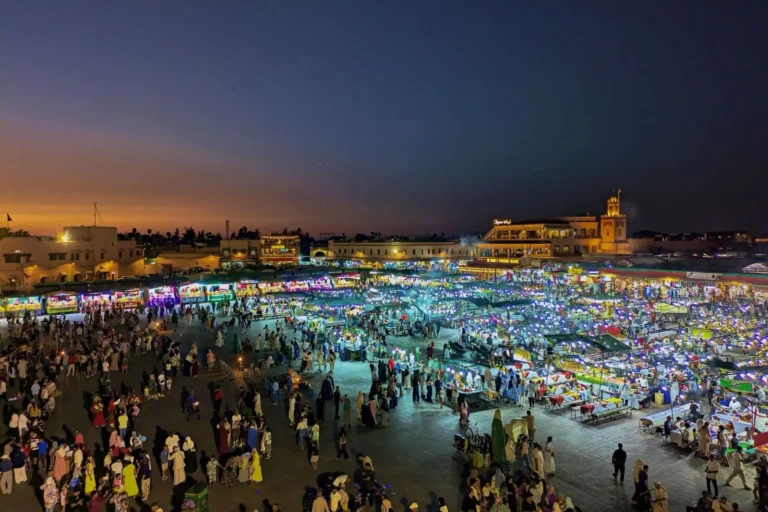
Skip the places with a man outside waving a menu at you. Some of the best tagines in the medina come from small family restaurants with three or four tables, where the cook is also the owner’s mother. At night, the stalls on Jemaa el Fna square are more about grilled meat and harira, but they’re worth an evening for the atmosphere. For tanjia, go to the small grill shops near the square where it’s served by weight with bread and olives.
If you’d rather not guess, our Marrakech food tours take you to the places I eat, including a tanjia straight out of the ashes.
In the mountains
This is where tagine is at its best, in my opinion. On an Atlas Mountains day trip, I’ll take you past the roadside grills where tagines sit in rows on the coals, or better, to lunch in a village family home. Bread from the clay oven, vegetables from the terrace below, a tagine that’s been cooking since the morning. That’s the meal people still talk about when they write to me a year later.
In a home kitchen
The best way to understand a tagine is to cook one with a Moroccan family, from the market to the table. It fits naturally into a slower kind of trip, and it’s one of the things we build into our Marrakech retreat, where the days leave plenty of time for long lunches.
Buying your own pot
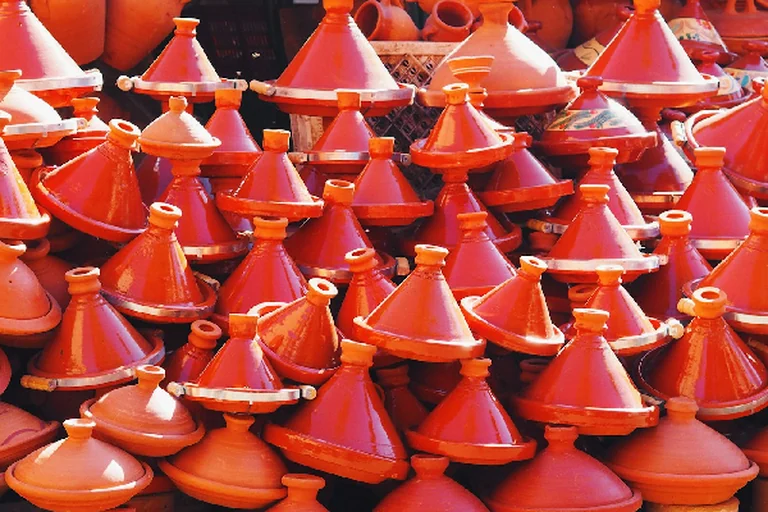
If you want to take a tagine home, buy it where the potters are. In Amizmiz, at the foot of the Atlas, local potters still make the plain clay ones meant for cooking. The brightly painted tagines in the souks are lovely, but most are decorative, so ask before you cook in one.
Mistakes I see first timers make
| Mistake | Why It Matters | Fix |
| Ordering tagine at every meal | By day three it all tastes the same and you’ve missed half of Moroccan food | Mix it up: tanjia, couscous on Friday, grilled meat, harira |
| Eating where the menu waver pulls you in | Those places cook for volume, often reheated | Pick small family places or ask your riad where they eat |
| Expecting it fast | A real tagine takes hours, so a 10 minute one was cooked earlier or rushed | Order the tagine of the day, or call ahead |
| Asking for rice or couscous with it | It’s not how it’s eaten, and the bread is half the pleasure | Use khobz to scoop the sauce |
| Cooking in a painted souvenir tagine | Many are made for display, not heat | Buy plain clay from potters and ask before you use it on a flame |
| Filling up on the bread and salads first | The starters come fast and free, the tagine comes last | Pace yourself, the best part is still in the pot |
Conclusion
A tagine looks simple, and in a way it is: a pot, a fire, some onions and a lot of patience. But the difference between a rushed one in a tourist restaurant and one that’s sat on the coals all morning in a mountain village is the difference between a dish you forget and one people still talk about a year later.
So order the chicken with preserved lemon first, tear your bread, eat from your side, and save room for a tanjia before you leave. If you’d like me to take you to the kitchens and grills I trust, have a look at our private tour experiences and tell me how hungry you are.
Frequently Asked Questions
Is Moroccan tagine spicy?
Not usually. It’s fragrant rather than hot, with ginger, cumin, saffron, cinnamon and paprika. If you like heat, ask for harissa on the side.
What do you eat with a tagine?
Bread. Moroccans use khobz to scoop up the meat and sauce. Rice and couscous on the side are tourist habits; couscous is its own dish here.
Can vegetarians eat tagine in Morocco?
Yes. Vegetable tagine is on almost every menu, and in the mountains it’s the everyday version. Just check that it isn’t cooked with meat stock, and ask for it fresh if you can.
Is tagine Moroccan or Algerian?
Both, and Tunisian too. The tagine is shared across North Africa, though each country cooks it its own way. The cone shaped clay pot and the sweet and savoury combinations are what most people think of as Moroccan.
Planning a trip to Marrakech?