What Is a Riad? Meaning, History and Staying in Marrakech
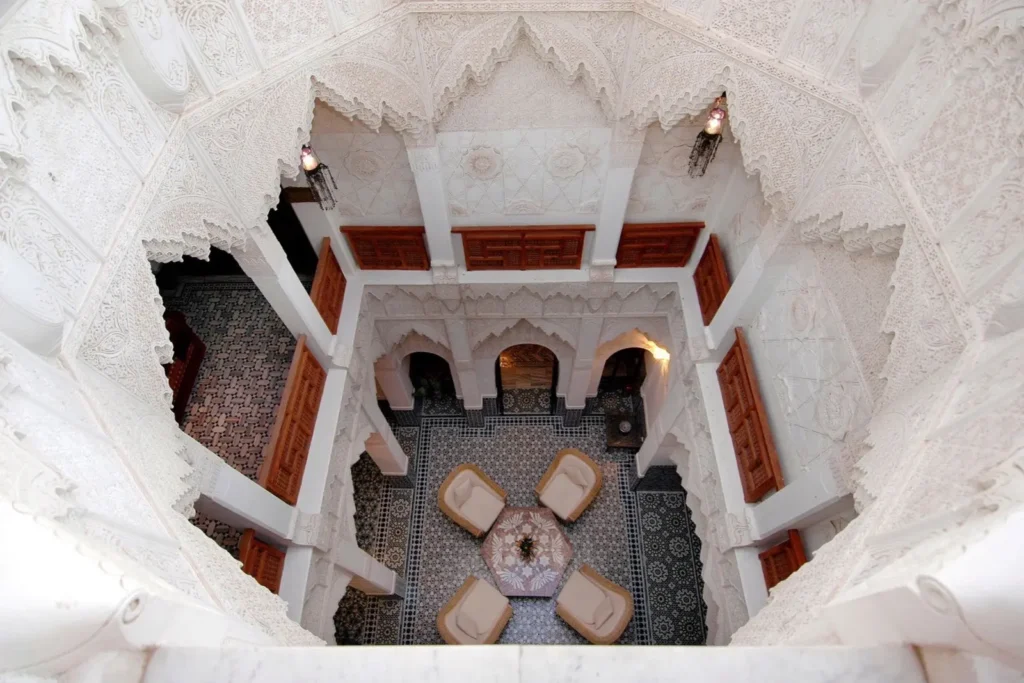
A riad is a traditional Moroccan house built around an inner courtyard garden. The name comes from the Arabic word for garden. Rooms on two or three floors face inward onto a patio, often with a fountain and orange trees, behind a plain street wall and a heavy wooden door. In Marrakech, most riads are now small guesthouses.
Staying in one means sleeping inside the medina, in a decorated home with a handful of rooms, breakfast on the roof terrace and staff who know your name by the second morning. Our guides collect guests from riads all the time, and the guests who enjoy them most are the ones who knew about the stairs, the lanes and the winter chill before they arrived. This guide covers all three.
Staying in a riad? Your guide can meet you at its door.
Riad Quick Facts
| Topic | Details |
|---|---|
| Meaning | From the Arabic for garden: a house built around an inner courtyard garden |
| Riad vs dar | A dar is also a courtyard house, usually with a smaller paved courtyard and no garden |
| Where | Mostly inside the Marrakech medina, the old walled city |
| Size | Usually small: a handful of rooms around one courtyard |
| Typical features | Courtyard, fountain, zellige tiles, tadelakt plaster, carved wood, roof terrace |
| Car access | Often none; porters carry luggage from the nearest road |
| Less ideal for | Guests with limited mobility, or anyone who needs a lift and a large pool |
| Last checked | November 2026 |
What Does Riad Mean?
Riad (ryad, riyad) comes from the Arabic for gardens. In Moroccan architecture it means a house whose courtyard is planted as a garden, traditionally divided into four parts with a fountain at the centre. A dar is also a courtyard house, but its courtyard is usually paved and smaller. Today the two words are used loosely, and many guesthouses called riads are technically dars.
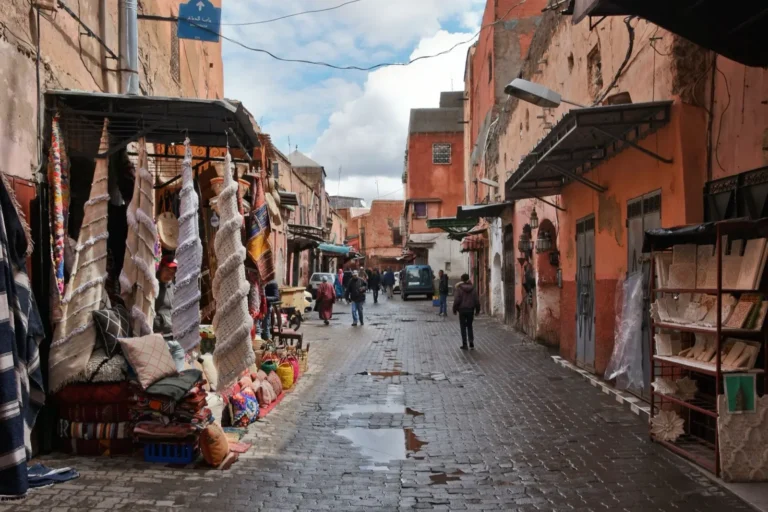
The design is old and practical. Thick walls keep the heat out in summer and the warmth in during winter. Windows face the courtyard instead of the street, which gives the family privacy and keeps out noise and dust. Water and plants cool the air. Step from a narrow, busy lane into a quiet riad and you see at once why Marrakchis built their homes this way.
What Will You See Inside a Riad?
Expect a central courtyard, hand-cut tiles, polished plaster, carved wood and a roof terrace.
The courtyard
Everything in a riad is arranged around the courtyard. Rooms open onto it through tall wooden doors, and the upper floors have galleries looking down. Some riads have a small plunge pool instead of a fountain. In winter the courtyard can feel cool in the evening, so some owners cover it with glass or canvas.
Zellige, tadelakt and carved plaster
Zellige is the glazed tile mosaic on floors, fountains and lower walls, made of small geometric pieces cut and fitted by hand. Tadelakt is a smooth, waterproof lime plaster polished with stones and black soap, typical of Marrakech and often used in bathrooms. Above the tiles you often find carved stucco and painted cedar ceilings. These are the same crafts you see in the Ben Youssef Madrasa and the Bahia Palace, on a smaller, more personal scale.
The roof terrace
Riads have flat roofs, and most guesthouses turn them into a terrace with plants, loungers and tables. Breakfast up there in the morning sun, or mint tea at sunset as the call to prayer moves across the rooftops, is one of the simple pleasures of a riad stay.
What Is the Difference Between a Riad, a Dar and a Hotel?
A riad and a dar are both small courtyard houses in the medina, while a hotel or resort is usually outside the old city, with more facilities and car access.
- Riad: courtyard house with a garden or fountain, small and personal, inside the medina.
- Dar: the same idea with a simpler paved courtyard; often smaller and sometimes more affordable.
- Hotel or resort: usually in Gueliz, Hivernage or the Palmeraie, with lifts, large pools, gyms and car access to the door, and less feel of the old city.
Many visitors split their stay: a few nights in a riad inside the medina, then a few nights at a resort with a big pool. Our guide on where to stay in Marrakech compares the neighbourhoods.
Is Staying in a Riad Worth It?
For most visitors, yes, as long as you are fine with stairs and a short walk from the nearest road.
What guests love
- Character: every riad is different, with real craftsmanship and quiet corners.
- Location: you walk out of the door into the medina, close to the souks and Jemaa el-Fna.
- Personal service: small teams, home-cooked breakfast and help with anything you need.
- Calm: thick walls block most street noise, so the courtyard feels peaceful.
What to know before you choose
- Stairs: most riads have no lift, and stairs can be narrow and steep. Ask for a ground-floor room if mobility is an issue.
- Sound: rooms open onto the shared courtyard, so you may hear other guests, and the early call to prayer from a nearby mosque.
- Light: rooms face inward, so some feel darker than a hotel room.
- Temperature: courtyards can feel chilly on winter nights. Check for heating, and air conditioning for summer.
- Finding it: riads sit down small lanes called derbs, and taxis cannot reach most of them.
How Do You Get to Your Riad?
Usually by car to the nearest road, then on foot with a porter and a handcart for your luggage. Most riads offer an airport transfer and send someone to meet the car. If you arrive alone, share the riad’s location pin with your driver and call the riad when you get close. Do not follow strangers who offer to show you the way; they will expect payment and may lead you somewhere else.
The lanes make more sense after a day or two. Our Marrakech medina guide is a good primer on the old city. When you take a private tour with us, your guide meets you at your riad, and on the first morning we point out the landmarks near your door so you can find your way back alone.
How Do You Choose a Riad in Marrakech?
Start with location and recent reviews, then check the room itself. These are the questions we suggest guests ask:
- Location: a riad a short walk from a road or taxi point is much easier with luggage. Mouassine and the Kasbah are both popular areas for riads.
- Reviews: read recent ones about noise, cleanliness, breakfast and how staff handle problems.
- Rooms: check heating and air conditioning, private bathrooms, and which floor you are on.
- Extras: a plunge pool, hammam, dinner service or rooftop view can make a difference.
- Children: some small riads are adults-only, or have open stairs and pools that need watching.
- Alcohol: not every riad serves it, so ask before you reserve if it matters to you.
What Is Riad Etiquette?
Treat a riad as a shared home. Keep voices low in the courtyard at night, since sound carries up to every room. Dress modestly in the shared spaces, and wear a cover-up across the courtyard if there is a plunge pool. Ask before photographing staff. A small tip for the team at the end of your stay is appreciated but never expected. And use them: they know the neighbourhood, can call taxis and can reserve restaurants for you.
With or Without a Guide?
A riad gives you a base inside the medina, but the lanes around it are confusing for the first day or two. A guide helps you learn the way home, shows you the monuments and souks nearby, and explains the architecture you are sleeping in. On our private Marrakech city tour, a licensed local guide collects you from your riad and walks the old city at your pace. Entrance fees are paid separately.
Frequently Asked Questions
What is a riad in Morocco?
A riad is a traditional Moroccan house built around an inner courtyard garden, with rooms on two or three floors facing inward and a plain wall to the street. The name comes from the Arabic for garden. In Marrakech, many riads inside the medina have been restored as small guesthouses with a handful of rooms and a roof terrace.
What is the difference between a riad and a dar?
Both are traditional Moroccan courtyard houses. A riad traditionally has a garden courtyard, often with trees and a fountain, while a dar has a simpler, usually smaller paved courtyard. In Marrakech today the names are used loosely, and many guesthouses called riads are technically dars. For a visitor, the stay is very similar.
Is it better to stay in a riad or a hotel in Marrakech?
It depends on what you need. A riad in the Marrakech medina gives you character, calm and a walk-out-the-door location near the souks. A hotel or resort in Gueliz, Hivernage or the Palmeraie gives you lifts, big pools and car access. Many visitors spend a few nights in each.
Can taxis reach a riad in the medina?
Usually not to the door. Most Marrakech riads sit down narrow lanes that cars cannot enter, so taxis and transfers stop at the nearest road. A porter or member of the riad staff then walks you there and brings your luggage on a handcart. Share the riad’s location pin with your driver before you set off.
Are riads suitable for families with children?
Many Marrakech riads welcome families, but check before you choose. Some small riads are adults-only, stairs are often steep and narrow, and courtyard plunge pools need watching with small children. Ask about family or connecting rooms, and a ground-floor room if you have a pushchair.
Do riads have air conditioning and heating?
Many guesthouse riads in Marrakech have air conditioning and heating, but it varies from room to room. Courtyards are open to the sky, so rooms can feel cold on winter nights and warm in summer. Check the room description, or ask the riad directly, especially if you travel between December and February or in July and August.
A riad gives you a small piece of Marrakech life: a courtyard, hand-cut tiles and a roof terrace above the old city. Pick one that suits how you travel and lean on the staff. If you have questions about where to stay or how to plan your days, message us on WhatsApp at +212 661 922 789.
Would you like a local guide to meet you at your riad?
Find our guides useful? Add Marrakech Tailor Made Tours as a preferred source on Google to see more of our Marrakech tips in your search results.
Planning a trip to Marrakech?