Berber Culture in Morocco: A Local’s Guide to Amazigh Traditions Around Marrakech
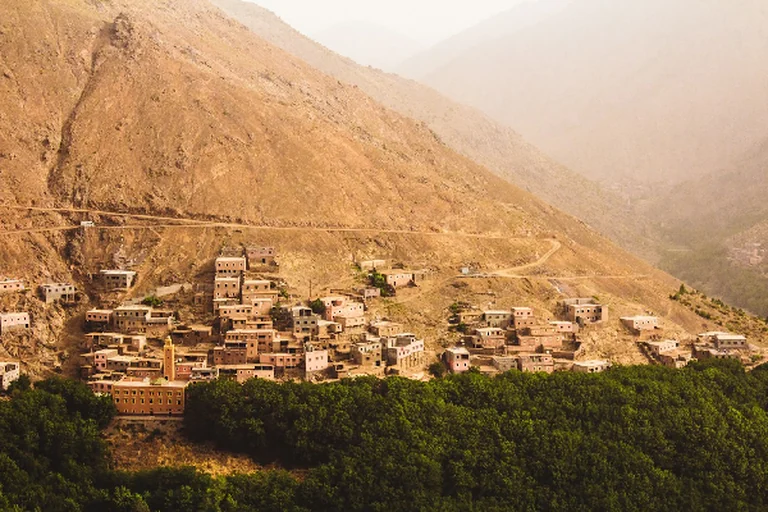
If you’re wondering where to experience Berber culture in Morocco and what it really looks like, here’s the short version:
- Distance: The first Amazigh villages of the High Atlas start about an hour south of Marrakech; Asni is 47 km away and Amizmiz about 55 km.
- What you’ll do: Visit a weekly souk, share tea and bread in a family home, walk between terraced villages and hear the Amazigh language spoken every day.
- Highlight: Lunch with a mountain family, cooked on a clay stove, with the valley below you.
- Lunch: Tagine with seasonal vegetables, fresh tafarnout bread, olive oil, honey and amlou.
- Good to know: Go on a souk day (Tuesday in Tahnaout, Saturday in Asni), dress modestly, carry small notes and always ask before taking photos of people.
I was born in Marrakech, but half my family’s stories start in the mountains, and my grandmother spoke Tachelhit before she ever spoke Arabic. I’ve taken hundreds of guests to Berber villages, and I’ll be honest from the first line: many “Berber experiences” sold in Marrakech are a show.
This guide is about the real thing: the language, the food, the souks and the manners that make a visit respectful instead of awkward.
On This Page
- Who the Berbers Really Are
- Where to Experience Berber Culture Near Marrakech
- A Day in a Berber Village, Hour by Hour
- Food, Crafts and Music
- Traditions Most Visitors Miss
- Who This Trip Suits (and Who Should Skip It)
- Mistakes I See First Timers Make
- Conclusion
Who the Berbers Really Are
Berbers are the indigenous people of North Africa, and most of them prefer the name Amazigh (plural Imazighen), usually translated as “free people”. “Berber” is the word outsiders gave them, and you’ll hear both in Morocco, but if you use Amazigh in a village, people notice and they smile.
Berber culture runs through the whole country, in the food, the music, the jewellery, the way people welcome guests. Many Moroccans in Marrakech have Amazigh roots, even if they speak Darija at home.
Three Languages, One Alphabet
There isn’t one Berber language in Morocco but three main ones: Tarifit in the Rif mountains of the north, Tamazight in the Middle Atlas, and Tachelhit in the High Atlas and the Souss, which is what you’ll hear in the villages around Marrakech. Amazigh became an official language alongside Arabic in the 2011 constitution, and you’ll now see its Tifinagh alphabet, with its circles, crosses and lines, on road signs and public buildings.
According to the 2024 census, about a quarter of Moroccans use Amazigh in daily life, 33% in rural areas. Amazigh associations argue the real figure is higher, and spending a day in the Atlas, I understand why.
Yennayer, the Amazigh New Year
Since 2024, 14 January has been an official national holiday in Morocco for Yennayer, the Amazigh New Year. In mountain families it’s a night of shared couscous or tagine, and in some homes a date stone or almond is hidden in the dish for luck. If you’re in Marrakech in mid January, ask your guide whether a family celebration is happening nearby.
Where to Experience Berber Culture Near Marrakech
You don’t need to go far. The first Amazigh villages of the High Atlas start about an hour from the medina, and that’s where I take most guests.
| Place | Distance from Marrakech | Why go |
| Tahnaout | About 35 km | One of the region’s largest Tuesday souks |
| Asni | About 47 km | Saturday souk and the road up to Imlil |
| Imlil | About 65 km (1 h 15 min) | Terraced villages, walnut trees and Toubkal views |
| Amizmiz | About 55 km | A weekly souk and traditional potters |
| Ourika Valley | About 1 hour | Riverside villages and family homes |
If you only have one day, my guide to the Imlil day trip from Marrakech is the best introduction, and the Ourika Valley day trip works well with children.
Further south, the earthen ksar of Aït Ben Haddou shows how Amazigh communities built fortified villages in clay along the old caravan routes. My Aït Ben Haddou day trip guide covers it in detail.
A Day in a Berber Village, Hour by Hour
This is the kind of day I like to build on our Atlas Mountains day trip from Marrakech, and on a Saturday we can add the Asni souk. A family lunch can be arranged on request. Times shift with the season, which is exactly the point of doing it privately.
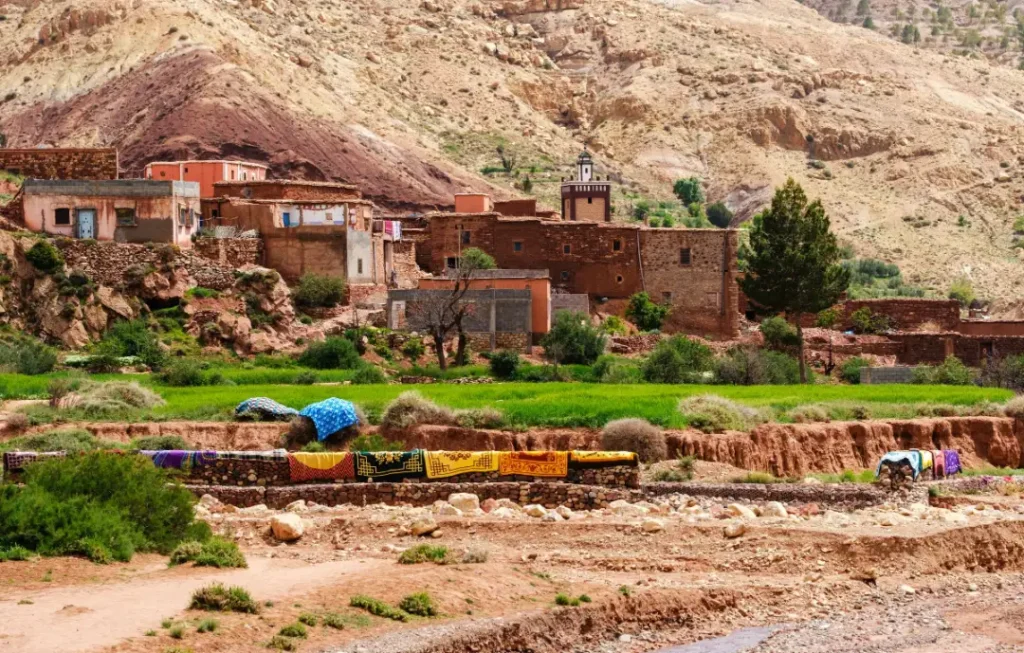
9 am, leaving Marrakech. We head south across the Haouz plain. Within an hour the road starts to climb, and the first Tifinagh letters appear on the signs.
10 am, the Asni souk. This is where mountain families come down to trade: mules tied up at the edge, piles of carrots and turnips, sacks of barley, live chickens, a barber working under a tarp. It’s a market for mountain families, which is why I bring you. Buy a bag of walnuts or almonds; it’s the easiest way to start a conversation.
11 am, up the valley. We drive towards Imlil and stop where the terraces begin. You’ll see irrigation channels shared between families, a system villages have managed together for generations, and walnut trees older than anyone living there.
12 pm, a gentle walk. About an hour on mule paths between two villages, at an easy pace. Women carry fodder on their backs, kids wave from rooftops, and every few minutes someone says “salam” or “azul”, the Amazigh hello.
1 pm, lunch in a family home. This is the heart of the day. You’ll take off your shoes, sit on cushions around a low table, and wash your hands with water poured from a kettle. Tea comes first, then bread, olive oil, honey and amlou, then a tagine that has been cooking since morning.
3 pm, the walk down. We return a different way, often through an orchard or past the village mosque and the communal bread oven.
5 pm, back in Marrakech. Tired, full and carrying more walnuts than you planned.
| LOCAL TIP FROM AYOUB “Learn two words before you go: azul (hello) and tanmirt (thank you). Say tanmirt to the woman who cooked your lunch, not just to the man who served it. In the mountains, women run the kitchen and much of the household, and they notice who thanks them. It’s the smallest thing you’ll do all day, and it changes how the whole family treats you.” |
Food, Crafts and Music
What Berber Families Eat
Mountain food is simple, seasonal and slow. Tagines are cooked over charcoal in clay pots, with whatever the garden gives: carrots, potatoes, turnips, a little lamb or chicken on good days. Friday is couscous day in most homes, a dish whose knowledge and practices UNESCO recognised as shared heritage of the Maghreb in 2020.
The things you’ll remember are smaller: tafarnout bread baked on hot stones, fresh olive oil from the family’s own trees, mountain honey, and amlou, a spread of roasted almonds, honey and argan oil. That argan oil comes from a tree whose traditional know-how, passed down mostly by Amazigh women of the southwest, is listed by UNESCO as intangible cultural heritage.
If you want to taste these flavours in the city first, our Marrakech food tours include stalls run by families from the mountains.
Rugs, Silver and Clay
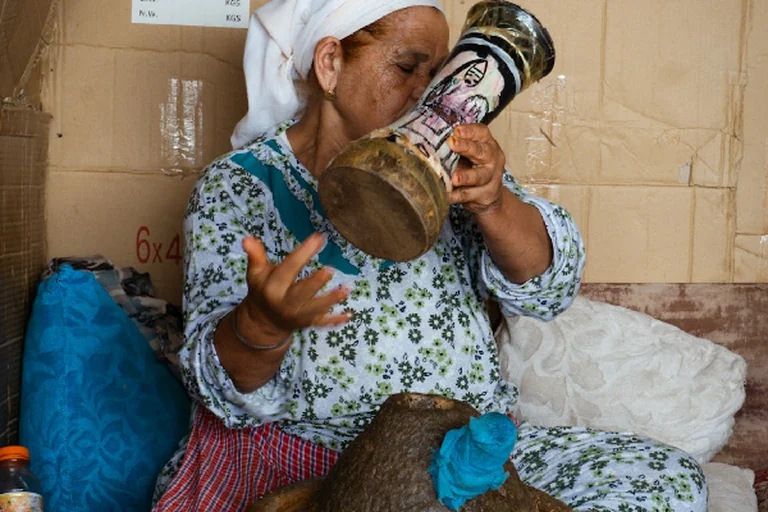
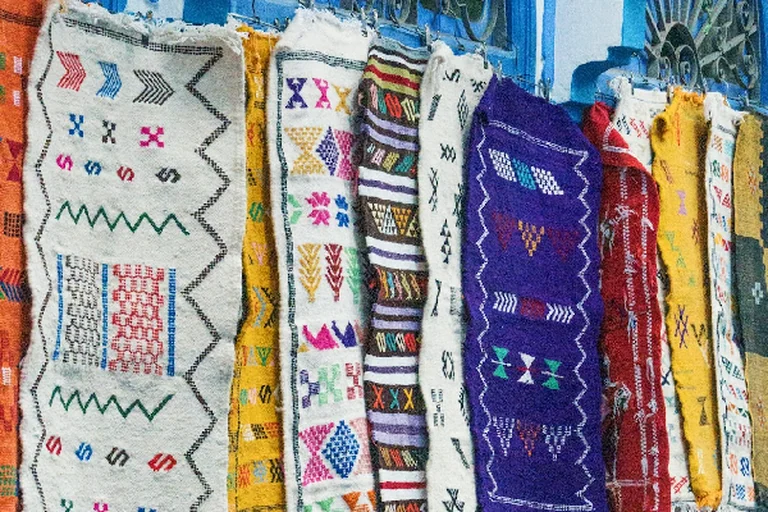
Amazigh women have woven rugs for centuries, and every region has its own patterns. The diamonds, zigzags and crosses often stand for protection, fertility or family. Silver jewellery follows the same logic, and you’ll see the ⵣ (yaz) symbol, the Tifinagh letter that stands for the “free man”, on pendants, flags and walls. In Amizmiz, potters still shape and fire clay the old way.
Music and Dance
In the High Atlas, the big village celebrations are built around Ahwach, a collective dance where men and women form lines, sing in turn and clap to the frame drums late into the night. Further west, UNESCO lists Taskiwin, the martial dance of the western High Atlas, named after the decorated horn each dancer carries, on its list of heritage in need of urgent safeguarding, because only a small number of villages still practise it.
Traditions Most Visitors Miss
Group tours tend to stop at a carpet shop and call it culture. These are the moments I try to build into a day instead.
The Communal Bread Oven
In many villages, families still bring their dough to a shared oven in the morning, marked with a sign so each loaf goes home with the right family. Ask your guide to time your walk so you pass it when the bread comes out.
Summer Weddings and Village Festivals
From July to September, after the harvest, villages hold weddings and festivals with Ahwach dancing and long meals. You can’t book one, but if you’re travelling in summer and a family invites you, say yes, dress well and bring a gift of sugar or tea.
The Weekly Souk as a Meeting Place
At the souk, marriages are discussed, news travels and disputes get settled over tea. Sit at a café at the edge of the Tahnaout souk on a Tuesday for half an hour and just watch.
Who This Trip Suits (and Who Should Skip It)
Curious first time visitors get the best counterweight to the medina: the same country, but quieter, slower and more personal.
Families do well. Children are welcome everywhere in the mountains, and village kids will find yours within minutes. Keep walks short and plan lunch early.
Couples and slow travellers often tell me the family lunch was the highlight of their whole trip. If you’d like more days at that pace, our Marrakech retreat pairs riad mornings with long, quiet days in the Atlas.
Photographers get beautiful light and faces, but only with patience and permission.
Who should skip it? Anyone who wants a staged show with costumes and a fixed menu. That exists, but it isn’t what this guide is about.
Mistakes I See First Timers Make
| Mistake | Why It Matters | Fix |
| Photographing people without asking | Many villagers, especially older women, don’t want their picture taken | Ask first, or with a gesture; accept a no with a smile |
| Booking a “Berber dinner show” in Marrakech and calling it done | It’s entertainment, not daily life | Spend half a day in a real village with a local guide |
| Dressing for the beach | Villages are conservative and you’ll be in people’s homes | Cover shoulders and knees; bring a light scarf |
| Giving sweets or money to children | It teaches begging and upsets parents | Bring pens or notebooks for the village school, or buy from local cooperatives |
| Carrying only cards | Souks, cooperatives and tips are cash only | Carry 200 to 300 dirhams in small notes |
| Visiting right after a disaster without thinking | Some Al Haouz villages are still rebuilding after the 2023 earthquake | Go with a local guide who knows which families welcome visitors and how to support them |
Conclusion
What people remember is a cup of tea they didn’t expect, a grandmother laughing at their tanmirt, and a souk where nobody is selling to them. Give it one unhurried day and you’ll understand the country better than after a week of monuments.
If you’d like me to take you, have a look at our private tour experiences and tell me what you’re curious about. I’ll pick the valley, the souk day and the family that fits you.
Frequently Asked Questions
How far is the closest Berber village from Marrakech?
The first Amazigh villages of the High Atlas are about an hour’s drive south. Asni is 47 km away and Imlil about 1 hour 15 minutes, so a day trip is easy.
Are Moroccans Berber or Arab?
Both, and often both in the same family. The Amazigh are North Africa’s indigenous people, and according to the 2024 census about a quarter of Moroccans still use an Amazigh language every day.
What should I wear, and do I need cash?
Cover shoulders and knees, wear comfortable walking shoes and bring a warm layer outside summer. Carry 200 to 300 dirhams in small notes for souks, cooperatives and tips.
Is a Berber village visit worth it?
Yes, if you go with a local guide and avoid staged shows. A day in the Atlas with a family lunch is one of the most memorable things you can do from Marrakech.
Planning a trip to Marrakech?